According to a national census conducted in 2008, prior to South Sudan’s independence in 2011, people with disabilities accounted for 5.1 per cent of the population, though the census is controversial and the number of disabled people is thought to be underestimated.
According to a 2016 household survey conducted by the Food Security and Livelihood Cluster in South Sudan, approximately 15% of households have at least one disabled family member.
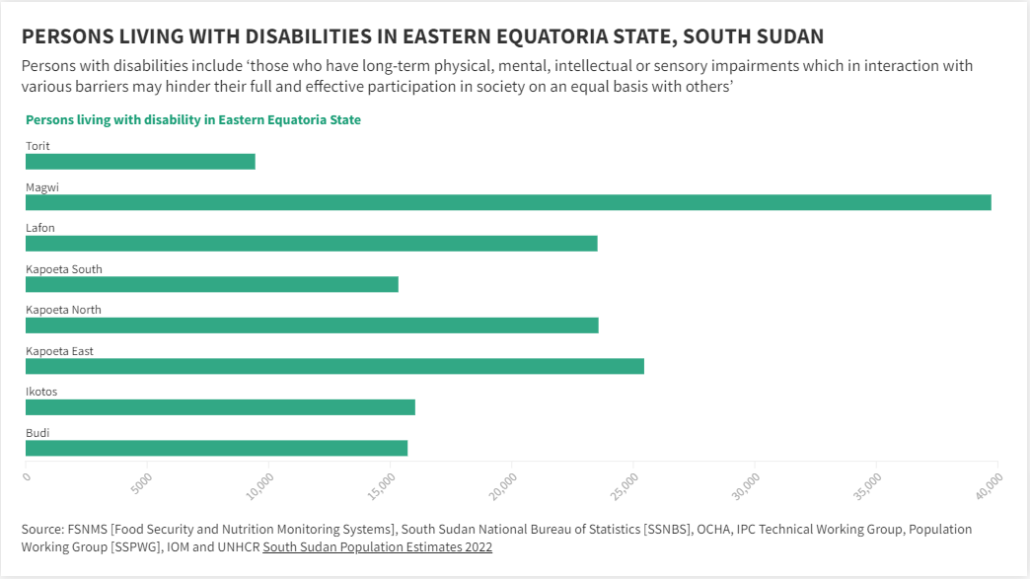
According to the Food Security and Nutrition Monitoring Systems, South Sudan National Bureau of Statistics, OCHA, IPC Technical Working Group, Population Working Group, IOM, and UNHCR – South Sudan Population Estimates 2022, the number of people living with disabilities in South Sudan’s Eastern Equatoria State is projected to be as shown in the visual below:
The above visualization is a small step in realising objective (3) of the WHO Global Disability Action Plan within South Sudan which is; to strengthen the collection of relevant and internationally comparable data on disability and support research on disability and related services.
Persons with Disabilities (PWDs) are defined by the United Nations Convention on the Rights of Persons with Disabilities as those who have long-term physical, mental, intellectual, or sensory impairments that, when combined with other barriers, prevent them from participating fully and effectively in society on an equal basis with others. Persons with disabilities are defined as “those who have long-term physical, mental, intellectual, or sensory impairments that, when combined with other barriers, may prevent them from participating fully and effectively in society on an equal basis with others.”
Decades of conflict in South Sudan, both before and after independence in 2011, have increased the rate of disability and rendered people with disabilities more marginalised and excluded, owing to the numerous attitudinal, environmental, and institutional barriers they face, as well as a lack of concerted efforts to include them.
The World Health Organization has published the Global Disability Action Plan. This document aims to assist countries in directing their efforts toward specific actions to address the health concerns of people with disabilities. Three major goals were identified in the Action Plan:
to remove barriers and improve access to health services and programmes;
to strengthen and extend rehabilitation, habilitation, assistive technology, assistance and support services, and community-based rehabilitation;
to strengthen the collection of relevant and internationally comparable data on disability and support research on disability and related services.
For the World Health Organization Global Disability Action Plan to be achieved in South Sudan, official statistics on people living with disabilities need to be recorded. This is because despite decades of conflict and its impact on poverty and services, leaving many South
Sudanese with different types of disabilities, there are no official statistics in relation to disability
Prevalence in the country.
About the Authors:
Oriba Douglas, a Data Speaks Fellow at #defyhatenow South Sudan, wrote this data story, which was edited by 211 Check Editor Emmanuel Bida Thomas and approved for publication by Steve Topua, a Data Analyst and Trainer. It’s part of the ongoing #defyhatenow South Sudan Data Speaks Fellowship program with funding from the European Union Delegation to South Sudan.
About South Sudan Data Speaks Fellowship:
This is a three months data journalism fellowship for South Sudanese content creators with an aim of educating participants on the fundamentals of data journalism through in-depth training facilitated by experienced data analysts.
The fellows have been selected from across South Sudan and they are trained in data sourcing/mining, data analysis, and data visualisation for three months (October to December)
Each fellow will produce a minimum of three (03) data stories during the fellowship. The focus will be on increasing access to information
https://211check.org/wp-content/uploads/2022/04/Person-living-with-Disabilities-in-Eastern-Equatoria-State-2022-Flourish.png5871044211 Checkhttps://211check.org/wp-content/uploads/2020/03/211Check_logo-1-300x120.png211 Check2022-04-04 14:26:262022-04-04 14:26:33Data Story: Comparable data on Persons with disability in Eastern Equatoria State
A look at the areas within South Sudan where flooding occurred the last year 2021, the populations affected and the exact counties that experienced the flooding.
By Oriba Douglas
South Sudan experienced the worst flooding it had seen in 60 years in 2021. The flooding exacerbated South Sudan’s already-existing problems.
Political instability, conflict, underdevelopment, and disease outbreaks are among the challenges confronting the world’s newest nation, which gained independence from Sudan in 2011.
The burden of all of these, as exacerbated by the flooding, is enormous, necessitating the provision of much-needed assistance and aid to those affected by the floods.
UN OCHA South Sudan and its humanitarian partners on the ground in flood-affected areas compiled figures of South Sudanese affected by flooding in order to coordinate and inform efforts to help those affected by the floods.
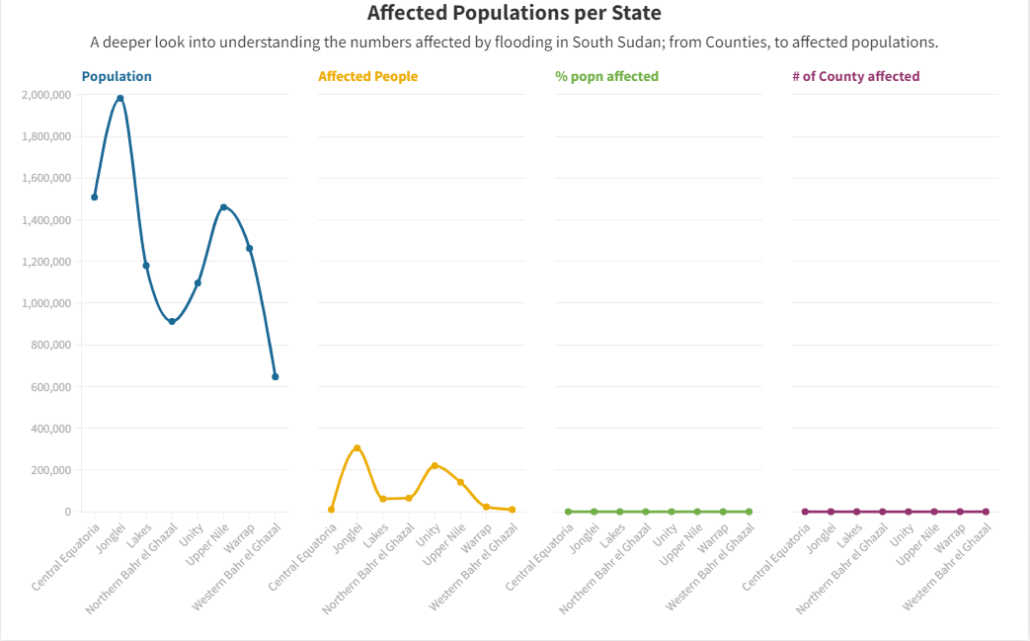
OCHA discovered that Fangak County in Jonglei State had the highest number of people affected by flooding out of all the counties in South Sudan, with 67,191 people affected, including women and children.
According to OCHA’s reports, September and October are the months of the year when the most severe flooding is likely to occur in flood-prone areas.
Jonglei State has the highest flood burden in South Sudan, with 304,765 people affected by flooding, accounting for 15% of the state’s population. Though the state is no stranger to flooding, flooding in 2021 wreaked havoc in seven counties. Areas were cut off and only accessible by canoes and other improvised boat-like structures.
Meanwhile, Western Bahr el Ghazal and Central Equatoria are tied for the least number of people affected by flooding, but of the two, Western Bahr el Ghazal State is the most affected, with 2% of its population affected, compared to Central Equatoria, which has 1% of its population affected. Flooding in Central Equatoria is mostly confined to the capital city of Juba, which is located within Juba County.
There have been no reported cases of widespread flooding in Western and Eastern Equatoria States, and as a result, no cases of displacement as a result of flooding have been recorded.
Upper Nile State has been found to be the State most affected by flooding in terms of area distribution, with 8 of its counties affected by flooding, compared to Central Equatoria State, which has only one county affected by flooding, Juba.
About the Authors:
Oriba Douglas, a Data Speaks Fellow at #defyhatenow South Sudan, wrote this data story, which was edited by 211 Check Editor Emmanuel Bida Thomas and approved for publication by Steve Topua, a Data Analyst and Trainer. It’s part of the ongoing #defyhatenow South Sudan Data Speaks Fellowship program with funding from the European Union Delegation to South Sudan.
About South Sudan Data Speaks Fellowship:
This is a three months data journalism fellowship for South Sudanese content creators with an aim of educating participants on the fundamentals of data journalism through in-depth training facilitated by experienced data analysts.
The fellows have been selected from across South Sudan and they are trained in data sourcing/mining, data analysis, and data visualisation for three months (October to December)
Each fellow will produce a minimum of three (03) data stories during the fellowship. The focus will be on increasing access to information
By comparing what a country owes with what it produces, the debt-to-GDP ratio reliably indicates that particular country’s ability to pay back its debts. Often expressed as a percentage, this ratio can also be interpreted as the number of years needed to pay back debt if GDP is dedicated entirely to debt repayment
By Okot Emmanuel
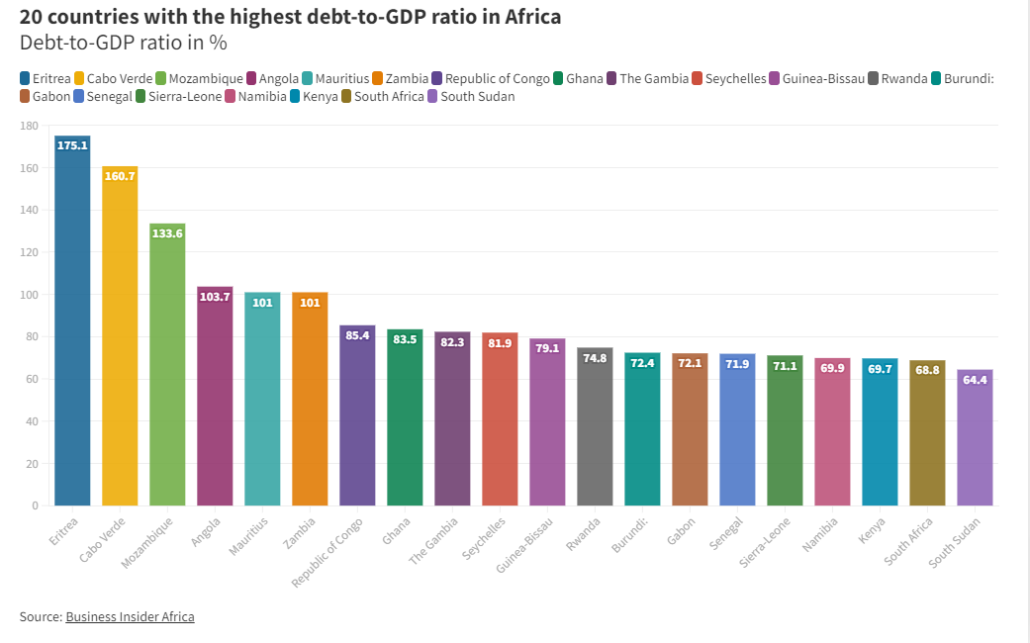
Business Insider Africa has listed South Sudan among twenty countries with the highest debt-to-gross domestic product ratio in the continent.
It says South Sudan has a debt-to-GDP ratio of 64.4% as of 2022.
The debt-to-GDP ratio is the metric comparing a country’s public debt to its gross domestic product.
The Business Insider says by comparing what a country owes with what it produces, the debt-to-GDP ratio reliably indicates that particular country’s ability to pay back its debts.
That said, below are 20 African countries with the highest debt-to-GDP ratios. This list is courtesy of a report by Statista dated December 2021. Although the exact figures of these countries’ public debts were not disclosed, the percentage of debt to GDP is clearly indicated as you can see below.
Country
Debt-to-GDP ratio
Eritrea
175.10%
Cabo Verde
160.7%.
Mozambique
133.60%
Angola
103.70%
Mauritius
101%
Zambia
101%
Republic of Congo
85.40%
Ghana
83.50%
The Gambia
82.30%
Seychelles
81.90%
Guinea-Bissau
79.10%
Rwanda
74.80%
Burundi:
72.40%
Gabon
72.10%
Senegal
71.90%
Sierra-Leone
71.10%
Namibia
69.90%
Kenya
69.70%
South Africa
68.80%
South Sudan
64.40%
A recent report by the World Bank showed that more than half of the world’s low-income countries, most of which are in Africa, are either currently struggling with debt distress or at risk of doing so.
The international financial institution says 15 low-income countries today have debt that is collateralized by natural resources—yet none provide details on the collateral arrangements.
The World Bank then stressed that greater debt transparency makes it easier for governments to make informed decisions about future borrowings.
In the same vein, it makes it easier for the citizens to hold their leaders accountable for the loans borrowed.
Also, Standard Bank Group recently red-flagged Ghana, Kenya Ethiopia, Zambia and Angola as African countries that could soon experience serious debt risks.
Although the exact figures of these countries’ public debts were not disclosed, The Business Insider Africa recommends that countries should take serious issues of debt.
About the Authors:
Okot Emmanuel, a Data Speaks Fellow at #defyhatenow South Sudan, wrote this data story, which was edited by 211 Check Editor Emmanuel Bida Thomas and approved for publication by Steve Topua, a Data Analyst and Trainer. It’s part of the ongoing #defyhatenow South Sudan Data Speaks Fellowship program with funding from the European Union Delegation to South Sudan.
About South Sudan Data Speaks Fellowship:
This is a three months data journalism fellowship for South Sudanese content creators with an aim of educating participants on the fundamentals of data journalism through in-depth training facilitated by experienced data analysts.
The fellows have been selected from across South Sudan and they are trained in data sourcing/mining, data analysis, and data visualisation for three months (October to December)
Each fellow will produce a minimum of three (03) data stories during the fellowship. The focus will be on increasing access to information
https://211check.org/wp-content/uploads/2022/03/Untitled-Visualisation-Flourish.png6501041211 Checkhttps://211check.org/wp-content/uploads/2020/03/211Check_logo-1-300x120.png211 Check2022-03-25 06:40:402022-03-25 06:40:48Business Insider Africa estimates South Sudan’s debt-to-gross domestic product ratio at 64.4%
34,362 candidates registered for the CSE exams in the academic year 2020/21, with 22,724 males and 11,638 females. This year, 32,167 candidates registered, with 21,799 males and 10,368 females.
By Adut Maguil
The Ministry of General Education and Instruction released the schedule for the 2021/22 Certificate of Secondary Education (CSE) Examinations last week, which will take place from April 18 to April 27.
According to Awut Deng Acuil, Minister of General Education and Instruction, 32,167 candidates have registered for the 2021 academic year exams. There are 10,368 females and 21,799 males among them.
However, when compared to the previous year, when 34,362 candidates enrolled, including 22,724 males and 11,638 females, this year’s total number of candidates registered represents a 6.39 percent decrease.
Male candidates fell by 925 from 22,724 in the 2020/21 exams, while female candidates fell by 1,270 from 11,638 the previous year.
Year
Males
Females
Total
2020/21
22,724
11,638
34,362
2021/22
21,799
10,368
32,167
According to Awut Deng Acuil, Minister of General Education and Instruction, security issues in some parts of the country, the negative impact of COVID-19, which resulted in protracted school closures, and the destructive floods are some of the reasons for the low number of candidates this academic year.
About the Authors:
Adut Maguil, a Data Speaks Fellow at #defyhatenow South Sudan, wrote this data story, which was edited by 211 Check Editor Emmanuel Bida Thomas and approved for publication by Steve Topua, Data Analyst and Trainer. It’s part of the ongoing #defyhatenow South Sudan Data Speaks Fellowship program with funding from the European Union Delegation to South Sudan.
About South Sudan Data Speaks Fellowship:
This is a three months data journalism fellowship for South Sudanese content creators with an aim of educating participants on the fundamentals of data journalism through in-depth training facilitated by experienced data analysts.
The fellows have been selected from across South Sudan and they are trained in data sourcing/mining, data analysis, and data visualisation for three months (October to December)
Each fellow will produce a minimum of three (03) data stories during the fellowship. The focus will be on increasing access to information
https://211check.org/wp-content/uploads/2022/03/CSE-2021_22.png575796211 Checkhttps://211check.org/wp-content/uploads/2020/03/211Check_logo-1-300x120.png211 Check2022-03-16 12:52:382022-03-16 12:56:30Data Story: 6.39% drop in the number of students registered for the certificate of secondary education examinations this year
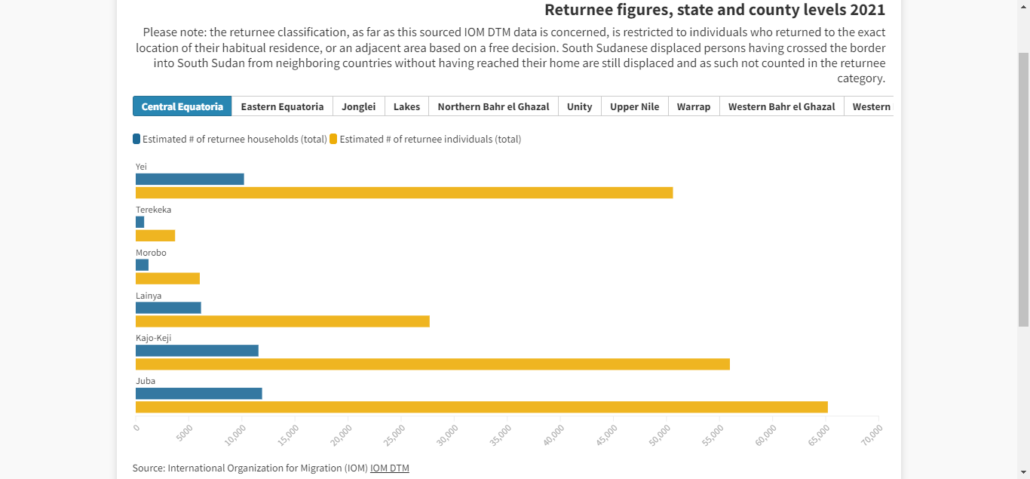
A returnee is someone who was displaced from their habitual residence either within South Sudan or abroad, who has since returned to their habitual residence.
According to Round 11 of IOM’s DTM baseline assessment, Wau County had the highest returnee individuals at 171,394 and also the highest household returnees at 40,541 households. This can be attributed to improved security situations influencing voluntary returns.
Kapoeta North County however produced the least Household returnees with 102 households and total individual returnees of 510 people was also the least among the Counties of South Sudan. This is majorly due to the nomadic lifestyle of the indigenous communities who prefer to be constantly on the move and are not necessarily influenced by security trends.
The other areas highlighted by the assessment are in full detail illustrated in the graph above.
CAPTION: Comparison of total returnees Household vs Individual
A comparison of the total number of returnees per State vs the total number of Household returnees per State asserted that Upper Nile State has the Highest number of Individual returnees which was found to be 361,232 individuals including women and children and also the highest number of Household returnees at 6,557 households.
Lakes State on the other hand had the lowest numbers of both individual and household returnees at 61,549 and 11,771 respectively.
Upper Nile State leads in the number of Individual returnees while Lakes State ranks lowest when it comes to individual returns and the same scenario repeats itself when it comes to household returnees.
Western Bahr El Ghazal State leads with the highest number of individual returnees from within South Sudan while Upper Nile State leads with the highest number of individual returnees from Outside South Sudan.
Western Bahr El Ghazal State also leads with the highest number of household returnees from within South Sudan while Upper Nile State leads with the highest number of household returnees from Outside South Sudan.
About the Authors:
Oriba Douglas, a Data Speaks Fellow at #defyhatenow South Sudan, wrote this data story, which was edited by 211 Check Editor Emmanuel Bida Thomas and approved for publication by Steve Topua, a Data Analyst and Trainer. It’s part of the ongoing #defyhatenow South Sudan Data Speaks Fellowship program with funding from the European Union Delegation to South Sudan.
About South Sudan Data Speaks Fellowship:
This is a three months data journalism fellowship for South Sudanese content creators with an aim of educating participants on the fundamentals of data journalism through in-depth training facilitated by experienced data analysts.
The fellows have been selected from across South Sudan and they are trained in data sourcing/mining, data analysis, and data visualisation for three months (October to December)
Each fellow will produce a minimum of three (03) data stories during the fellowship. The focus will be on increasing access to information
https://211check.org/wp-content/uploads/2022/04/County-Returnees-Flourish.png6351366211 Checkhttps://211check.org/wp-content/uploads/2020/03/211Check_logo-1-300x120.png211 Check2022-03-04 12:40:002022-04-04 12:43:35Data Story: South Sudan Returnee figures, state and county levels 2021
The Revitalised Agreement on the Resolution of the Conflict in the Republic of South Sudan demands that there is 35% women representation in all levels of government. In this short article we look at the statistics of women in ministerial positions, members of state independent commissions and county commissioners in Western Equatoria State.
Out of the seventeen (17) state ministries, only four (04) female ministers were appointed by the various parties to the R-ARCSS in Western Equatoria State.
As per the power-sharing agreement, Western Equatoria State has ten counties in which only two (02) females were appointed as the County commissioners.
No Female advisors have been appointed out of the five.
In the six (06) state independent commissions that brought 30 individuals only nine (09) are females.
Gender
State Ministers
Independent Commissions
County Commissioners
Male
13
24
08
Female
04
09
02
Total
17
30
10
% of Women
23.5%
30%
20%
This brings the total number of female executives in the Western Equatoria State government to 13.
Statistics of women representation in Western Equatoria State Executive
S/N
Name of candidate
Post
Party
1
Female
Ministry of Animal Resources, Fisheries and Tourism
IG
2
Female
Ministry of Roads and Bridges
IG
3
Female
Ministry of General Education and Instruction
IG
4
Female
Ministry of Gender, Child and Social Welfare
IO
5
Female
Member, Anti-Corruption Commission
IG
6
Female
Member, Employee Justice Chamber
SSOA
7
Female
Member, HIV/AIDS Commission
IG
8
Female
Member, RRC
IO
9
Female
Member, Human Rights Commission
IG
10
Female
Chairperson, Conflict Resolution and Reconciliation Commission
SSOA
11
Female
Member, Conflict Resolution and Reconciliation Commission
IG
12
Female
Commissioner, Mundri West County
SSOA
13
Female
Commissioner, Mundri East County
IG
1
SPLM-IG
8
2
SPLM-IO
2
3
SSOA
3
4
OPP
0
About the Authors:
Justin Anthony, a Data Speaks Fellow at #defyhatenow South Sudan, wrote this data story, which was edited by 211 Check Editor Emmanuel Bida Thomas and approved for publication by Steve Topua, Data Analyst and Trainer. It’s part of the ongoing #defyhatenow South Sudan Data Speaks Fellowship program with funding from the European Union Delegation to South Sudan.
About South Sudan Data Speaks Fellowship:
This is a three months data journalism fellowship for South Sudanese content creators with an aim of educating participants on the fundamentals of data journalism through in-depth training facilitated by experienced data analysts.
The fellows have been selected from across South Sudan and they are trained in data sourcing/mining, data analysis, and data visualisation for three months (October to December)
https://211check.org/wp-content/uploads/2022/02/women-in-the-western-equatoria-state-government.png10201220211 Checkhttps://211check.org/wp-content/uploads/2020/03/211Check_logo-1-300x120.png211 Check2022-02-20 19:18:322022-02-20 19:18:37Data Story: Women in the Western Equatoria State Government
South Sudan’s Ministry of Finance and Economic Planning has proposed a budget worth 287 billion South Sudanese Pounds for the Fiscal Year 2021/22.
The Finance Minister, Agak Achuil Lual says the government proposes to spend a total of SSP 287.0 billion which represents 12.8% of the country’s GDP estimated at SSP 2.241.0 trillion.
The 2021/2022 budget proposes increased allocation to the social sector (education, health, social and humanitarian affairs). Allocation to the social sector increased to SSP 80.2 billion from SSP 312.2 billion in FY 2020/2021.
Allocation to the education sector is SSP 49.2 billion which indicates an increase of SSP 24.7 billion which represents 100.8 per cent compared to the FY 2020/2021 allocation of SSP 24.5 billion.
Similarly allocation to the health sector of SSP 27.7 billion (of which SSP 9.0 billion is earmarked to combat COVID19 pandemic) the provision of SSP 27.7 billion to the health sector interprets to an increase of 575.6 per cent compared to the SSP 4.1 billion allocations in FY 2020/2021 budget.
The budget allocation to the social and Humanitarian Affairs sector of SSP 3.3 billion has increased by 26.9 per cent compared to the FY 2020/2021 allocation of SSP 2.6 billion.
Of this amount, as stated by Acuil, SSP 169.3 billion or 7.6% will be financed by domestic revenues while SSP 77.4 billion which represent 3.5% will be through credit (i.e. concessional loans) from cooperating partners.
The balance of SSP 40.3 billion, which represents 1.8% will be financed through commercial borrowing.
Revenue Sources for Financing the FY 2021/22 Budget
Source
Amount in SSP
Percentage (out of GDP)
Domestic Revenues
169.3 billion
7.6 %
Credit from cooperating partners (Concessional Loans)
77.4 billion
3.5%
Commercial borrowing
40.3 billion
1.8 %
The budget aims at stimulating economic recovery and reducing inflation from 22.8 in the fiscal year 2020/2021 to 16.3 per cent.
The Finance Ministry further said the FY 2021/2022 Budget is to consolidate peace, combat the COVID-19 pandemic and increase investment in physical infrastructure.
About the Authors:
Okot Emmanuel, a Data Speaks Fellow at #defyhatenow South Sudan, wrote this data story, which was edited by 211 Check Editor Emmanuel Bida Thomas and approved for publication by Steve Topua, Data Analyst and Trainer. It’s part of the ongoing #defyhatenow South Sudan Data Speaks Fellowship program with funding from the European Union Delegation to South Sudan.
About South Sudan Data Speaks Fellowship:
This is a three months data journalism fellowship for South Sudanese content creators with an aim of educating participants on the fundamentals of data journalism through in-depth training facilitated by experienced data analysts.
The fellows have been selected from across South Sudan and they are trained in data sourcing/mining, data analysis, and data visualisation for three months (October to December)
Each fellow will produce a minimum of three (03) data stories during the fellowship. The focus will be on increasing access to information
https://211check.org/wp-content/uploads/2022/02/FY-2021_22-Budget-Financing.png424796211 Checkhttps://211check.org/wp-content/uploads/2020/03/211Check_logo-1-300x120.png211 Check2022-02-04 11:42:362022-02-04 11:42:42Data Story: South Sudan’s Fiscal Year 2021/22 Budget
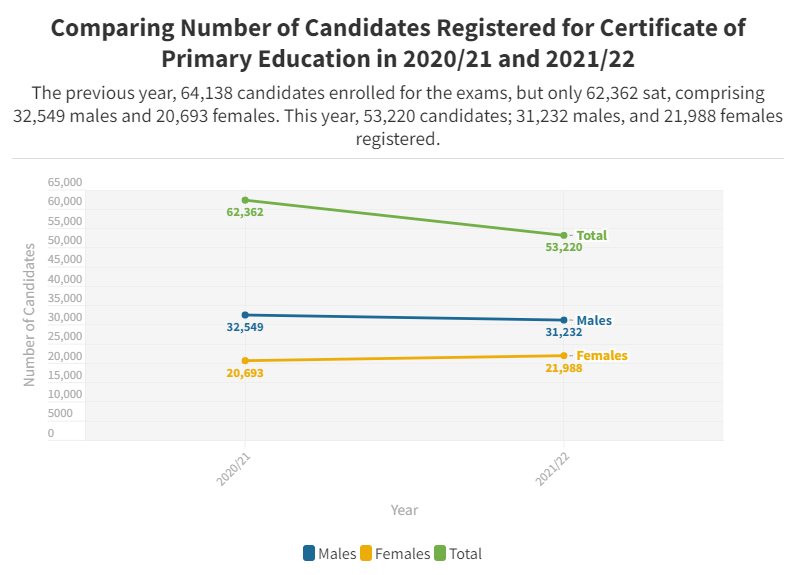
The previous year, 64,138 candidates enrolled for the exams, but only 62,362 sat, comprising 32,549 males and 20,693 females. This year, 53,220 candidates; 31,232 males, and 21,988 females registered.
By Adut Maguil
Last week, the Ministry of General Education and Instruction stated that 53,220 candidates, 31,232 men, and 21,988 females, had registered for the next certificate of primary education examinations, which will begin on February 14, 2022.
However, as compared to the previous year, when 64,138 candidates enrolled for the exams, 62,362 sat for the exams, comprising 32,549 males and 20,693 females, this year’s number shows a 14.69 percent decrease in the number of candidates.
Male candidates declined by 1,317 from 32,549 in the 2020/21 exams, while female candidates grew by 1,295 from 20,692 the previous year.
Year
Males
Females
Total
2020/21
32,549
20,693
62,362
2021/22
31,232
21,988
53,220
Table Showing Number of Candidates Registered for the Primary Education Examination in the two most recent years
Security issues in some parts of the country, the detrimental impact of COVID-19, which resulted in protracted school closures, and the destructive floods, according to Awut Deng Acuil, Minister of General Education and Instruction are some of the reasons for the low number of candidates.
About the Authors:
Adut Maguil, a Data Speaks Fellow at #defyhatenow South Sudan, wrote this data story, which was edited by 211 Check Editor Emmanuel Bida Thomas and approved for publication by Steve Topua, Data Analyst and Trainer. It’s part of the ongoing #defyhatenow South Sudan Data Speaks Fellowship program with funding from the European Union Delegation to South Sudan.
About South Sudan Data Speaks Fellowship:
This is a three months data journalism fellowship for South Sudanese content creators with an aim of educating participants on the fundamentals of data journalism through in-depth training facilitated by experienced data analysts.
The fellows have been selected from across South Sudan and they are trained in data sourcing/mining, data analysis, and data visualisation for three months (October to December)
Each fellow will produce a minimum of three (03) data stories during the fellowship. The focus will be on increasing access to information
https://211check.org/wp-content/uploads/2022/01/CPE-Chart.png575796211 Checkhttps://211check.org/wp-content/uploads/2020/03/211Check_logo-1-300x120.png211 Check2022-01-31 14:11:382022-01-31 14:11:42Data Story: 14.69% drop in the number of pupils registered for final primary education examinations this year
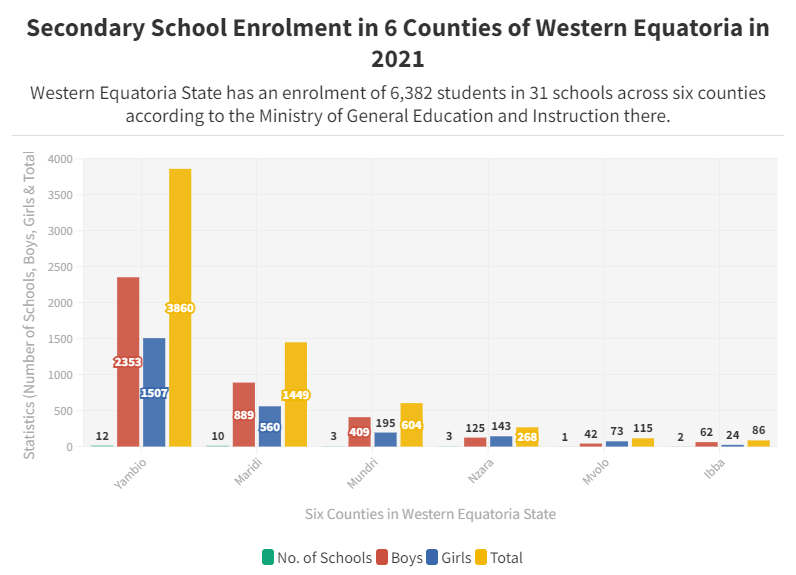
Western Equatoria State has an enrolment of 6,382 students in 31 schools across six counties according to the Ministry of General Education and Instruction there.
By Justin Anthony
The State Ministry of General Education and Instruction in Western Equatoria State says in a data obtained by 211 Check that 6,382 students returned to secondary schools in the area after schools reopened in April 2021 following closure due to the COVID-19 pandemic.
The statistics show enrolment in the counties of Yambio, Nzara, Mvolo, Ibba, Maridi and Mundri . Tambura has been excluded due to the conflict that occurred there.
County
No. of Schools
Boys
Girls
Total
Yambio
12
2353
1507
3860
Nzara
3
125
143
268
Mvolo
1
42
73
115
Ibba
2
62
24
86
Maridi
10
889
560
1449
Mundri
3
409
195
604
Total
31
3880
2502
6382
Table showing secondary school enrolment in 6 counties of Western Equatoria in 2021
The data also shows that at least 320 students are known to have dropped out of school due to factors such as financial constraints, early and unintended pregnancies, marriages, among other reasons.
County
No. of Schools
Boys Dropped
Girls Dropped
Total
Yambio
12
52
75
127
Nzara
3
10
16
26
Mvolo
1
8
10
18
Ibba
2
4
8
12
Maridi
10
43
63
106
Mundri
3
17
20
37
Total
31
134
192
326
Table showing number of students who have dropped out of secondary school in 6 counties of Western Equatoria in 2021
About the Authors:
Justin Anthony, a Data Speaks Fellow at #defyhatenow South Sudan, wrote this data story, which was edited by 211 Check Editor Emmanuel Bida Thomas and approved for publication by Steve Topua, Data Analyst and Trainer. It’s part of the ongoing #defyhatenow South Sudan Data Speaks Fellowship program with funding from the European Union Delegation to South Sudan.
About South Sudan Data Speaks Fellowship:
This is a three months data journalism fellowship for South Sudanese content creators with an aim of educating participants on the fundamentals of data journalism through in-depth training facilitated by experienced data analysts.
The fellows have been selected from across South Sudan and they are trained in data sourcing/mining, data analysis, and data visualisation for three months (October to December)
Each fellow will produce a minimum of three (03) data stories during the fellowship. The focus will be on increasing access to information
https://211check.org/wp-content/uploads/2022/01/2021-WES.png575796211 Checkhttps://211check.org/wp-content/uploads/2020/03/211Check_logo-1-300x120.png211 Check2022-01-31 12:37:282022-01-31 12:37:40Data Story: 2021 Secondary School Enrolment in 6 Counties of Western Equatoria
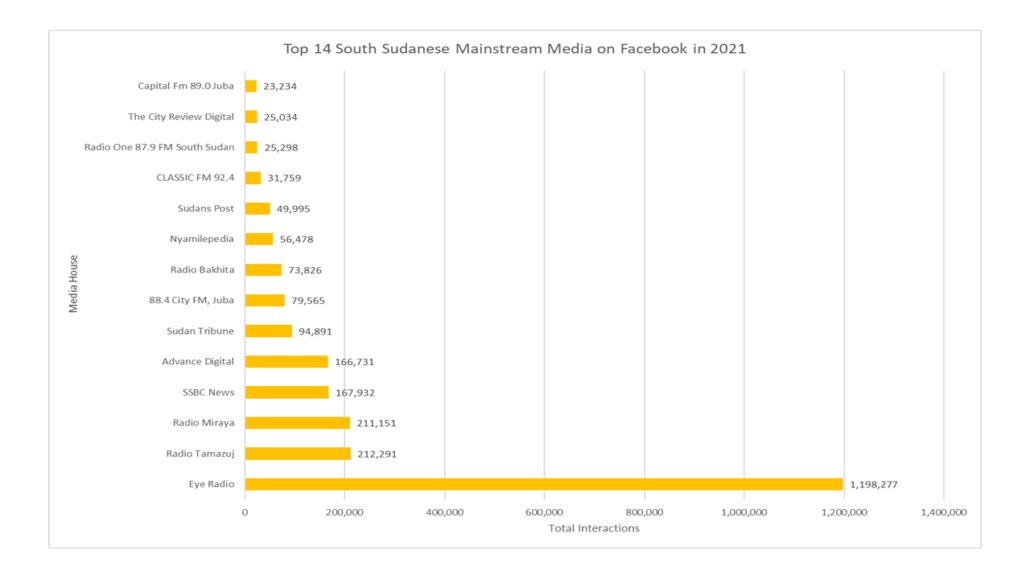
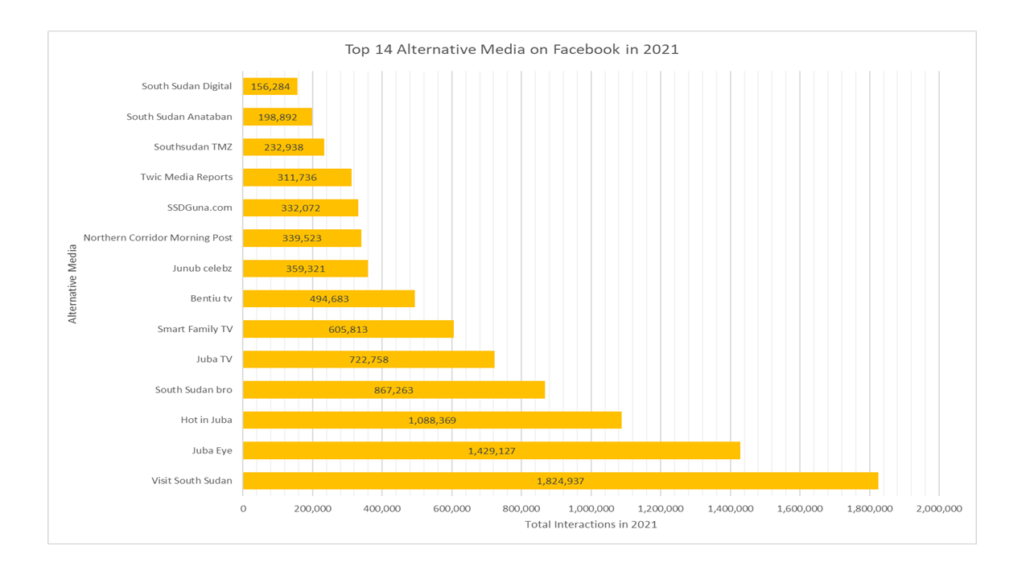
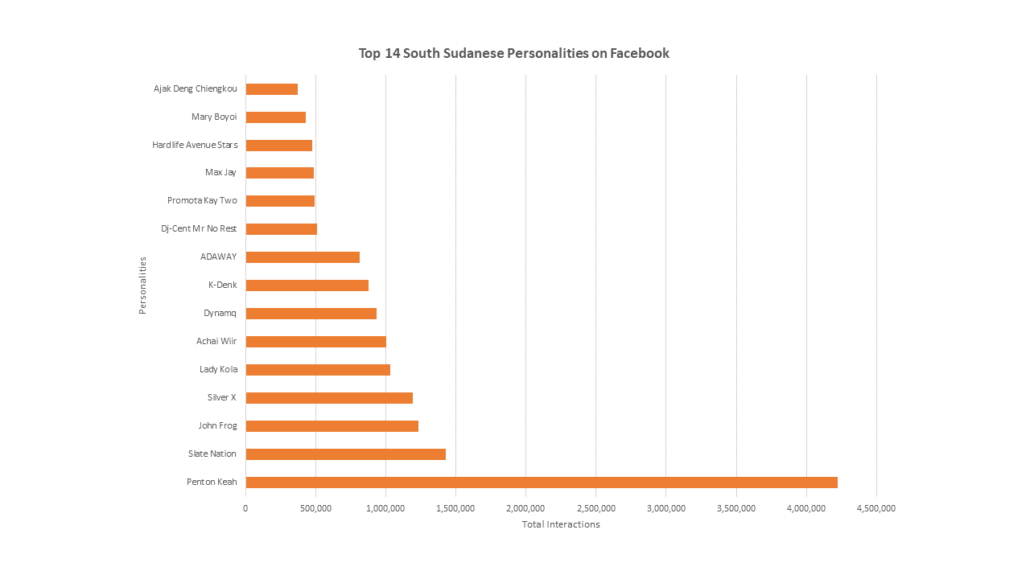
Here’s our list of 14 very interactive South Sudanese pages on Facebook. Together, all these pages have nearly five million followers! Some of them represent South Sudanese-famous personalities, mainstream and alternative media.
By Adut Maguil
Facebook is one of the most liked social media platform today. It has had a grip over young and mature persons for over 12 years. Millions of people have access to the Internet most of whom use Facebook accounts to do various things.
Facebook is a great way to stay connected and get to know who is in your social circle but it is also an easy way to keep tabs on your favorite celebrities and big public figures. You can connect with their regular posts by simply following their page on Facebook to receive instant updates if you’re a true fan.
These profiles post photos and videos about varied things. Some of them are updates about their products and business as a marketing option. Some others upload photos of their loved ones, funny podcasts, food recipes and so on. In the end, the most important thing is to keep viewers entertained
People use social media, such as Facebook, all the time. Maybe to see what their friends are doing, to read the news. Many famous persons, brands and even football teams have fan pages in this platform.
In this article, we will review the top 14 South Sudanese Facebook pages that have had huge interaction in 2021.
Quick Glance at the 14 leading South Sudanese pages on Facebook by category:
Category 1: Mainstream Media
Eye Radio
Total Interactions = 1,198,277 | Owned Total Views = 4,124,572
Total Posts = 3,253 | Page Followers = 155,363
Page Follower Growth % = 81.10%
2. Radio Tamazuj
Total Interactions = 212,291 | Owned Total Views = 2,837,308
Total Posts = 1,580 | Page Followers = 156,145
Page Follower Growth % = 21.92%
3. Radio Miraya
Total Interactions = 211,151 | Owned Total Views = 5,487
Total Posts = 1,229 | Page Followers = 76,076
Page Follower Growth % = 19.50%
4. SSBC News
Total Interactions = 167,932 | Owned Total Views = 5,060,430
Total Posts = 332 | Page Followers = 110,535
Page Follower Growth % = 40.42%
5. Advance Digital
Total Interactions = 166,731 | Owned Total Views = 2,573,452
Total Interactions = 79,565 | Owned Total Views = 34,928
Total Posts = 314 | Page Followers = 46,138
Page Follower Growth % = 23.46%
8. Radio Bakhita
Total Interactions = 73,826 | Owned Total Views = 1,057,870
Total Posts = 510 | Page Followers = 33,411
Page Follower Growth % = 37.30%
9. Nyamilepedia
Total Interactions = 56,478 | Owned Total Views = 42,497
Total Posts = 1,623 | Page Followers = 28,210
Page Follower Growth % = 7.70%
10. Sudans Post
Total Interactions = 49,995 | Owned Total Views = 225,370
Total Posts = 2,869 | Page Followers = 15,537
Page Follower Growth % = 38.06%
11. CLASSIC FM 92.4
Total Interactions = 31,759 | Owned Total Views = 7,715
Total Posts = 1,141 | Page Followers = 16,871
Page Follower Growth % = 24.03%
12. Radio One 87.9 FM South Sudan
Total Interactions = 25,298 | Owned Total Views = 114,258
Total Posts = 689 | Page Followers = 15,838
Page Follower Growth % = 63.84%
13. The City Review Digital
Total Interactions = 25,034 | Owned Total Views = 145
Total Posts = 2,192 | Page Followers = 2,476
Page Follower Growth % = 141.09%
14. Capital Fm 89.0 Juba
Total Interactions = 23,234 | Owned Total Views = 81,607
Total Posts = 627 | Page Followers = 16,503
Page Follower Growth % = 67.22%
Category 2: Alternative Media
Visit South Sudan
Total Interactions = 1,824,937 | Owned Total Views = 391,335
Total Posts = 3,134 | Page Followers = 93,662
Page Follower Growth % = 286.94%
2. Juba Eye
Total Interactions = 1,429,127 | Owned Total Views = 8,270,305
Total Posts = 2,766 | Page Followers = 203,164
Page Follower Growth % = 29.33%
3. Hot in Juba
Total Interactions = 1,088,369 | Owned Total Views = 2,988,615
Total Posts = 2,672 | Page Followers = 218,367
Page Follower Growth % = 15.61%
4. South Sudan bro
Total Interactions = 867,263 | Owned Total Views = 141,738
Total Posts = 2,793 | Page Followers = 53,871
Page Follower Growth % = 51.17%
5. Juba TV
Total Interactions = 722,758 | Owned Total Views = 1,188,929
Total Posts = 2,618 | Page Followers = 283,302
Page Follower Growth % = 6.53%
6. Smart Family TV
Total Interactions = 605,813 | Owned Total Views = 261,591
Total Posts = 1,032 | Page Followers = 75,653
Page Follower Growth % = 47.19%
7. Bentiu tv
Total Interactions = 494,683 | Owned Total Views = 18,339,809
Total Posts = 985 | Page Followers = 146,604
Page Follower Growth % = 185.11%
8. Junub celebz
Total Interactions = 359,321 | Owned Total Views = 1,328,825
Total Posts = 1,360 | Page Followers = 56,911
Page Follower Growth % = 188.08%
9. Northern Corridor Morning Post
Total Interactions = 339,523 | Owned Total Views = 126,705
Total Posts = 2,705 | Page Followers = 99,434
Page Follower Growth % = 12.83%
10. SSDGuna.com
Total Interactions = 332,072 | Owned Total Views = 393,520
Total Posts = 2,006 | Page Followers = 44,751
Page Follower Growth % = 125.13%
11. Twic Media Reports
Total Interactions = 311,736 | Owned Total Views = 2,569,410
Total Posts = 1,707 | Page Followers = 46,679
Page Follower Growth % = 104.57%
12. Southsudan TMZ
Total Interactions = 232,938 | Owned Total Views = 2,193,968
Total Posts = 1,611 | Page Followers = 87,377
Page Follower Growth % = 35.93%
13. South Sudan Anataban
Total Interactions = 198,892 | Owned Total Views = 16,497
Total Posts = 778 | Page Followers = 47,607
Page Follower Growth % = 52.69%
14. South Sudan Digital
Total Interactions = 156,284 | Owned Total Views = 1,199,502
Total Posts = 805 | Page Followers = 70,301
Page Follower Growth % = 37.88%
Category 3: Personalities
Penton Keah
Total Interactions = 4,220,859 | Owned Total Views = 129,989,670
Total Posts = 109 | Followers = 663,919
Page Follower Growth % = 797.26%
2. Slate Nation
Total Interactions = 1,430,606 | Owned Total Views = 298,239
Total Posts = 408 | Followers = 280,918
Page Follower Growth % = 62.20%
3. John Frog
Total Interactions = 1,235,283 | Owned Total Views = 667,266
Total Posts = 602 | Followers = 112,354
Page Follower Growth % = 157.81%
4. Silver X
Total Interactions = 1,195,292 | Owned Total Views = 1,516,678
Total Posts = 1,241 | Followers = 190,148
Page Follower Growth % = 210.86%
5. Lady Kola
Total Interactions = 1,029,422 | Owned Total Views = 10,668,611
Total Posts = 624 | Followers = 181,548
Page Follower Growth % = 710.59%
6. Achai Wiir
Total Interactions = 1,003,176 | Owned Total Views = 3,635,829
Total Posts = 265 | Followers = 250,560
Page Follower Growth % = 65.07%
7. Dynamq
Total Interactions = 933,976 | Owned Total Views = 693,812
Total Posts = 974 | Followers = 75,564
Page Follower Growth % = 28.89%
8. K-Denk
Total Interactions = 879,271 | Owned Total Views = 378,618
Total Posts = 1,732 | Followers = 173,572
Page Follower Growth % = 16.08%
9. ADAWAY
Total Interactions = 811,505 | Owned Total Views = 74,104
Total Posts = 300 | Followers = 104,485
Page Follower Growth % = 175.18%
10. Dj-Cent Mr No Rest
Total Interactions = 511,346 | Owned Total Views = 318,166
Total Posts = 990 | Followers = 40,742
Page Follower Growth % = 401.44%
11. Promota Kay Two
Total Interactions = 494,042 | Owned Total Views = 1,240,353
Total Posts = 767 | Followers = 134,775
Page Follower Growth % = 118.23%
12. Max Jay
Total Interactions = 485,231 | Owned Total Views = 320,163
Total Posts = 1,492 | Followers = 54,150
Page Follower Growth % = 192.80%
13. Hardlife Avenue Stars
Total Interactions = 477,757 | Owned Total Views = 2,837,994
Total Posts = 903 | Followers = 73,561
Page Follower Growth % = 677.93%
14. Mary Boyoi
Total Interactions = 426,878 | Owned Total Views = 663,600
Total Posts = 256 | Followers = 98,774
Page Follower Growth % = 1562.86%
15. Ajak Deng Chiengkou
Total Interactions = 373,882 | Owned Total Views = 4,944,076
Total Posts = 593 | Followers = 238,363
Page Follower Growth % = 27.32%
There’s our list of 14 very interactive South Sudanese pages on Facebook. Have you ever thought deeply about this? When describing those leading 15 Facebook pages a normal user will see how important they are in the country to be on the top list. Together, all those pages have nearly five million followers! Some of them represent South Sudanese-famous personalities, mainstream and alternative media.
The number of likes and followers of an account indicates the interest or popularity of a specific person, brand, or product and that is why likes have way much importance on social media platforms like Facebook as they play a very vital role in building up a reputation on the Internet. Similarly, the popularity level on Facebook is also calculated by the number of fan base and interactions. Knowing about the leading pages on Facebook in the country is impressive.
About the Authors:
Adut Maguil, a Data Speaks Fellow at #defyhatenow South Sudan, wrote this data story, which was edited by 211 Check Editor Emmanuel Bida Thomas and approved for publication by Steve Topua, Data Analyst and Trainer. It’s part of the ongoing #defyhatenow South Sudan Data Speaks Fellowship program with funding from the European Union Delegation to South Sudan.
About South Sudan Data Speaks Fellowship:
This is a three months data journalism fellowship for South Sudanese content creators with an aim of educating participants on the fundamentals of data journalism through in-depth training facilitated by experienced data analysts.
The fellows have been selected from across South Sudan and they are trained in data sourcing/mining, data analysis, and data visualisation for three months (October to December)
Each fellow will produce a minimum of three (03) data stories during the fellowship. The focus will be on increasing access to information
https://211check.org/wp-content/uploads/2022/01/Top-14-Facebook-Pages-in-2021.png6281200211 Checkhttps://211check.org/wp-content/uploads/2020/03/211Check_logo-1-300x120.png211 Check2022-01-24 14:46:482022-01-24 14:58:30Top 14 Leading South Sudanese Facebook Pages in 2021
We may request cookies to be set on your device. We use cookies to let us know when you visit our websites, how you interact with us, to enrich your user experience, and to customize your relationship with our website.
Click on the different category headings to find out more. You can also change some of your preferences. Note that blocking some types of cookies may impact your experience on our websites and the services we are able to offer.
Essential Website Cookies
These cookies are strictly necessary to provide you with services available through our website and to use some of its features.
Because these cookies are strictly necessary to deliver the website, refusing them will have impact how our site functions. You always can block or delete cookies by changing your browser settings and force blocking all cookies on this website. But this will always prompt you to accept/refuse cookies when revisiting our site.
We fully respect if you want to refuse cookies but to avoid asking you again and again kindly allow us to store a cookie for that. You are free to opt out any time or opt in for other cookies to get a better experience. If you refuse cookies we will remove all set cookies in our domain.
We provide you with a list of stored cookies on your computer in our domain so you can check what we stored. Due to security reasons we are not able to show or modify cookies from other domains. You can check these in your browser security settings.
Other external services
We also use different external services like Google Webfonts, Google Maps, and external Video providers. Since these providers may collect personal data like your IP address we allow you to block them here. Please be aware that this might heavily reduce the functionality and appearance of our site. Changes will take effect once you reload the page.
Google Webfont Settings:
Google Map Settings:
Google reCaptcha Settings:
Vimeo and Youtube video embeds:
Privacy Policy
You can read about our cookies and privacy settings in detail on our Privacy Policy Page.



 211 Check