
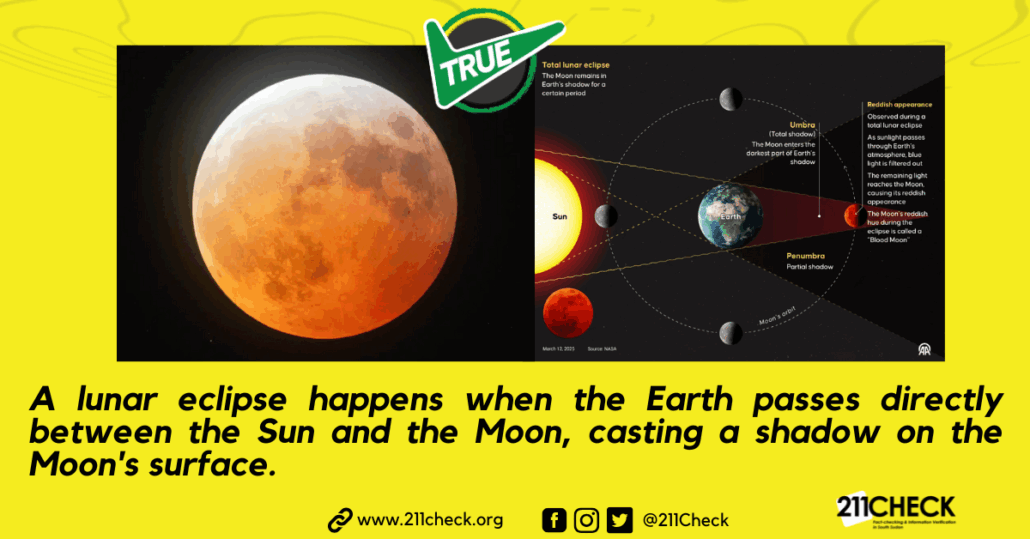
 211 Check Website Graphic Feature
Explainer: Why a lunar eclipse occurs and how?
Writer: Ochaya Jackson
On Sunday, 7th 2025 evening, at night lunar eclipse occurred, and some citizens were surprised to see the full moon turning red. Faced with conflicting realities stemming from traditional beliefs, religion, and the scientific realm, many South Sudanese exhibited different reactions as the lunar eclipse was taking place based on their beliefs.
So this explainer provides key facts to shape the understanding of citizens on how and why lunar eclipses happen.
Overview:
A lunar eclipse happens when the Earth passes directly between the Sun and the Moon, casting a shadow on the Moon’s surface. This event can only occur during a “Full Moon”, and unlike solar eclipses, it is safe to view with the naked eye and can be seen from any location on the night side of Earth.
During a total lunar eclipse, the Moon can appear reddish due to sunlight scattering through Earth’s atmosphere, a phenomenon also known as a “blood moon”
Key Facts:
A lunar eclipse requires the Sun, Earth, and Moon to be aligned in a straight line, with the Earth in the middle. This alignment can only happen during a Full Moon phase, when the Moon is on the opposite side of Earth from the Sun.
Earth’s Shadow:
The Earth casts two types of shadow onto the Moon:
- Umbra: The darker, central shadow where the Earth completely blocks direct sunlight.
- Penumbra: The lighter, outer shadow where the Earth only partially blocks the Sun’s light.
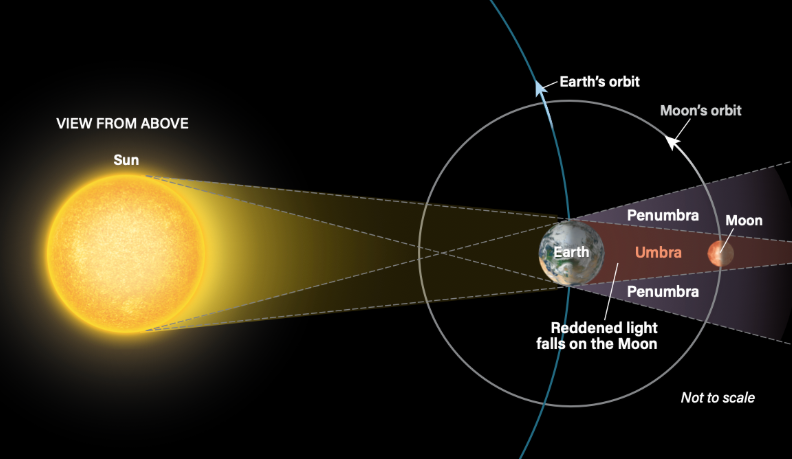
Source: Astronomy Magazine
Types of Lunar Eclipses:
- Penumbral: The Moon passes only through Earth’s penumbra, resulting in a subtle, hard-to-observe darkening.
- Partial: A portion of the Moon moves into the Earth’s umbral shadow, causing a part of the Moon to darken.
- Total: The entire Moon passes through the Earth’s umbral shadow, making it appear dark or reddish.
Duration:
Total lunar eclipses can last for a long, with the period of totality lasting from about 30 minutes to over an hour or more.
Visibility:
Unlike solar eclipses, which are only visible from a small area, a lunar eclipse can be seen from anywhere on the night side of Earth where the Moon is above the horizon.
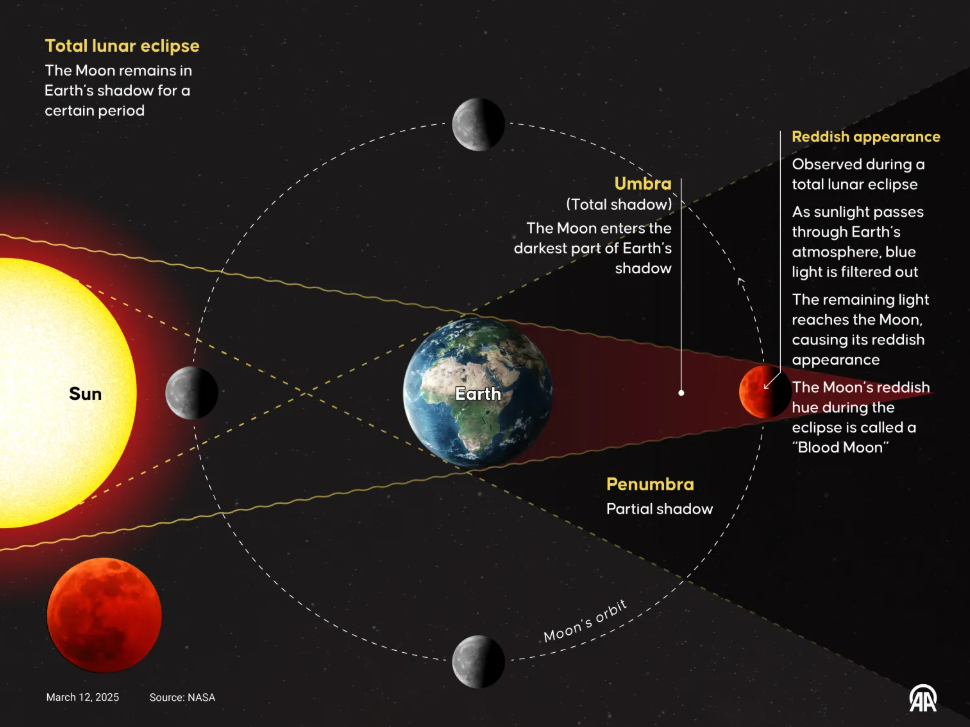
(Photo by Murat Usubali/Anadolu via Getty Images). Source: News Nation
Viewing Safety:
It is perfectly safe to view any type of lunar eclipse with the naked eye or through binoculars and telescopes; no special equipment or protection is needed.
Red “Blood Moon”:
During a total lunar eclipse, Earth’s atmosphere scatters the sunlight, filtering out blue light and allowing red light to reach the Moon, giving it a rusty red color.
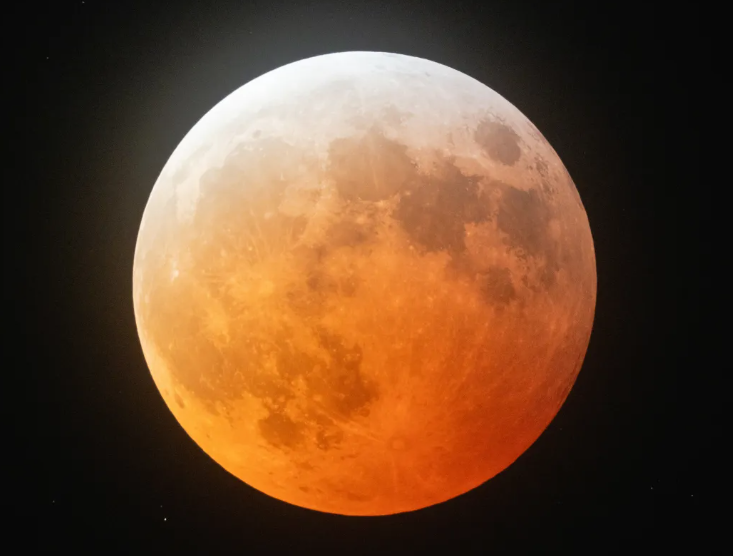
The “blood moon” total lunar eclipse is seen above Austin, Texas, on March 14. (Photo by Rick Kern/Getty Images). Source: News Nation
Conclusion:
Naturally, a lunar eclipse can occur during a full moon when the Sun, Earth, and Moon are all aligned.
To ensure accuracy and transparency, we at 211 Check welcome corrections from our readers. If you spot an error in this article, please request a correction using this form. Our team will review your request and make the necessary corrections immediately, if any.
Fighting misinformation and disinformation in the media is crucial to avoiding fake news. Don’t share content you’re uncertain about. False information can harm and mislead people, risking their lives, but fact-check before sharing. For more details, visit https://211check.org/ or message us on WhatsApp at +211 917 298 255. #FactsMatter.

 211 Check Website Graphics & Getty Image






 211 Check Website Graphic Image Feature
 211 Check Website Graphic Feature
Leave a Reply
Want to join the discussion?Feel free to contribute!