Digital violence, defined as an act of violence rooted in gender inequality and committed using information and communication technologies or digital media, is a widespread issue facing women globally, with types including cyberbullying, sexting, stalking, grooming, shaming, and doxing; in South Sudan, a lack of specific laws addressing these crimes puts women at even greater risk online.
Writer: Beatrice Amude Paulino
Violence against women is one of the world’s most widespread human rights violations. It results in physical, sexual or mental harm or suffering to women, and its means and tools vary with the passage of time and the growing information and technological revolution.
According to the United Nations Population Fund, online violence or digital violence is defined as an act of violence perpetrated by one or more individuals that are rooted in gender inequality and gendered norms, and that is committed, assisted, aggravated and amplified in part or fully by the use of information and communication technologies or digital media, against a person based on their gender .”
Digital violence is the behaviour that aims at harming or a situation where other users want to impose circumstances that the user is unwilling to or does not consent to in mobile or internet applications. Digital violence can also refer to disruptive online actions, such as cyber-bullying or cyber warfare.
Types of Digital Violence:
Cyberbullying: is psychological harassment, mainly through the media.
Sexting: can be in the form of photos and videos of a sexual form that can be posted online or sent to someone through a phone.
Stalking: is referred to as harassment on any technological platform.
Grooming: is the type of harassment exercised by an adult person towards a child, such as when an adult sexually abuses a child.
Shaming is any action designed to shame the victim, mostly towards women.
Doxing: consists of the action of publishing private information without the person’s consent.
The Characteristics of Digital Violence:
Digital abuse can occur in people of all ages, although it is especially common among teenagers and young people who use smartphones more often. Signs of digital abuse may include but are not limited to intimidation and harassment, surveillance and stalking, sexual coercion, possession and control.
Levels of Digital Violence against Women in South Sudan:
According to a United Nations Population Fund (UNFPA) study, “ 85% of women globally have been exposed to or experienced some form of online violence, and nearly 40% have experienced it personally.”
Research in 2020 by Plan International, the #freeToBeOnline campaign to protect girls and women online, stated that 14 thousand of girls from 22 countries, including South Sudan, were physically and racially threatened and abused online. The report stated that cyberbullying may contribute to the suicide surge among youth today. But for South Sudan, the young generation engaged both online and offline “might be dying in silence without speaking out.’’
An article by Defyhatenow in February 2021 discusses the issue of physical and cyberbullying in South Sudan, highlighting the lack of specific laws addressing these crimes. The authors cite various sources to support their claims, including research studies and interviews with experts and victims.
Conclusion:
Policymakers should consider taking action to protect women’s rights in digital spaces after acknowledging the potential risks women may face due to digital technology.
The government in South Sudan should ensure the operation of effective women’s protection mechanisms online and safeguarding policies while respecting women’s rights in all settings where women access the digital environment, including the home, offices, education settings, cybercafes, youth centres, libraries, and health care facilities.
To ensure accuracy and transparency, we at 211 Check welcome corrections from our readers. If you spot an error in this article, please request a correction using this form. Our team will review your request and make the necessary corrections immediately, if any.
https://211check.org/wp-content/uploads/2023/04/A-wordpress-site-featured-image-for-an-article-exploring-digital-violence-and-what-it-means-for-women-in-South-Sudan.-Use-yellow-black-and-while-colours-in-the-design.png6281200211 Checkhttps://211check.org/wp-content/uploads/2020/03/211Check_logo-1-300x120.png211 Check2023-04-29 13:14:442023-04-29 13:14:50Explainer: What does digital violence mean to women in South Sudan?
The survey is expected to be an essential resource for the government’s development planning, decision-making, and provision of services as it provides the latest accurate population estimates and other demographic and socio-economic characteristics of the inhabitants.
Writer: Jibi Moses
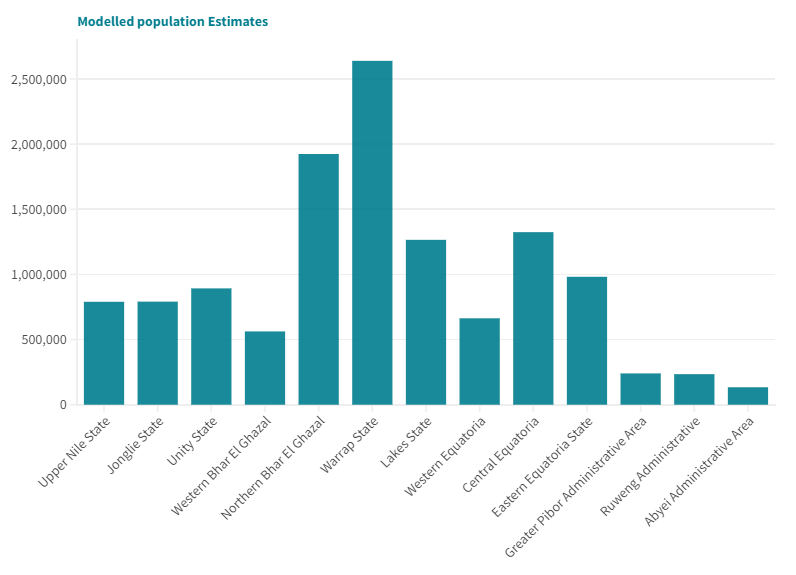
The National Bureau of Statistics (NBS) in South Sudan released the Population Estimation Survey 2021 (PES) on April 6th, 2023, revealing a surge in the country’s population to 12.4 million people, a rise of over four million people. The PES 2021 was conducted between May 28th and June 15th, 2021, across ten states and three Administrative areas, with a female population of 52.9% and a male population of 47.1%, while the youth population stands at 77%.
The PES 2021 is expected to be an essential resource for the government’s development planning, decision-making, and provision of services. The survey will monitor the performance of the National Development strategy and the sustainable development goals while providing policymakers with briefs and reference points for research.
With South Sudan’s last census conducted in 2008, the PES 2021 provides the latest accurate population estimates and other demographic and socio-economic characteristics of the inhabitants. The NBS utilised satellite imagery and enumeration to ensure the quality of information and data for the survey met the basic assumptions of the analytic method.
Despite the impact of civil war outbreaks since independence in 2011, the PES 2021 provides a comprehensive and up-to-date representation of South Sudan’s population, enabling policymakers and decision-makers to implement evidence-based planning and decision-making for progress and sustainable development in the country.
The country’s last Census was in 2008, when it was still an autonomous region of Sudan. While releasing the results, Isaiah Chol Aruai, the chairperson of NBS, explained that the figures are based on satellite imagery and enumeration across ten states and three Administrative areas.
“The quality of information and data for a given locale, as well as the ability of the data to meet the basic assumptions of the analytic method, are key to performing accurate estimates or projections,” Isaiah Chol Aruai said.
National statistical offices often produce estimates and projections of various characteristics of a population. These statistics are a vital source of information for decision-makers throughout the government, the private sector, and civil society. An estimate calculates a population’s size or distribution or another population characteristic for the present or past. At the same time, a projection describes these characteristics in the future.
In most countries, policymakers and other data users often require accurate information between census data releases every ten years. Although a full population count only occurs during a census, statistical methods and tools often produce regular, up-to-date population estimates.
Population estimates can describe the population size and demographic characteristics such as age, sex, or education level. Population estimates depend on change’s demographic components: mortality, fertility, and migration.
Estimates of mortality, fertility, and migration estimates are derived from data available from censuses, surveys, registration systems, and other administrative records. Estimates and projections are calculated similarly. However, estimates employ observed data and hypotheses of demographic change when data are incomplete. Projections, on the other hand, rely on hypotheses about demographic change in the future.
One of the most widely used approaches for producing population estimates and projections is the Cohort Component Method, which can be used to calculate detailed statistics such as population by age and sex, total fertility rate, infant mortality rate, and population growth rate. A population may also be estimated and projected for multiple geography units, from the national to various subnational levels (e.g.States, Counties, Districts, Payams, Bomas).
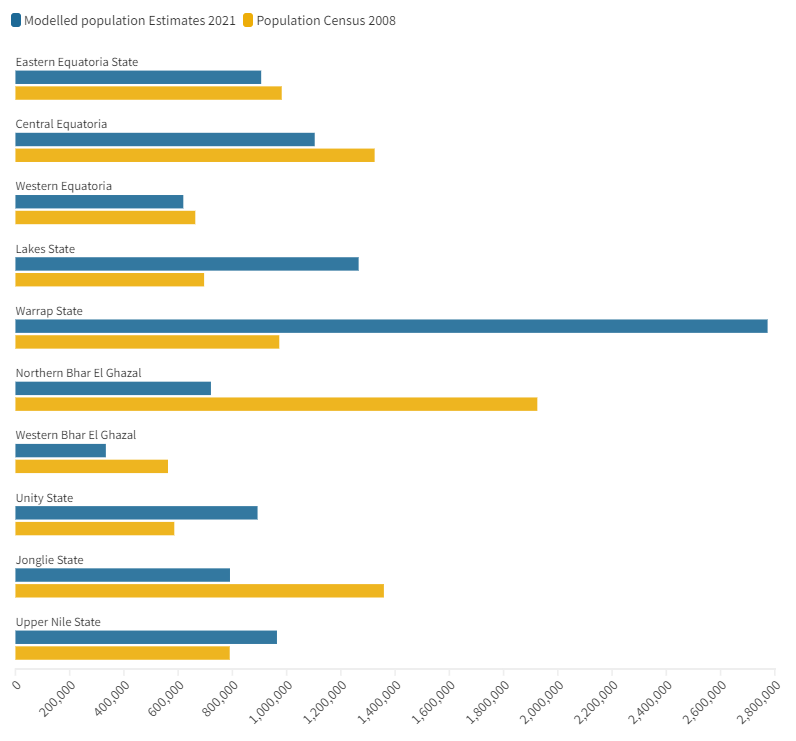
Figure 2: A bar chart showing the total populations from the ten states and the administrative Areas | Source: Flourish Studio Data Visualization
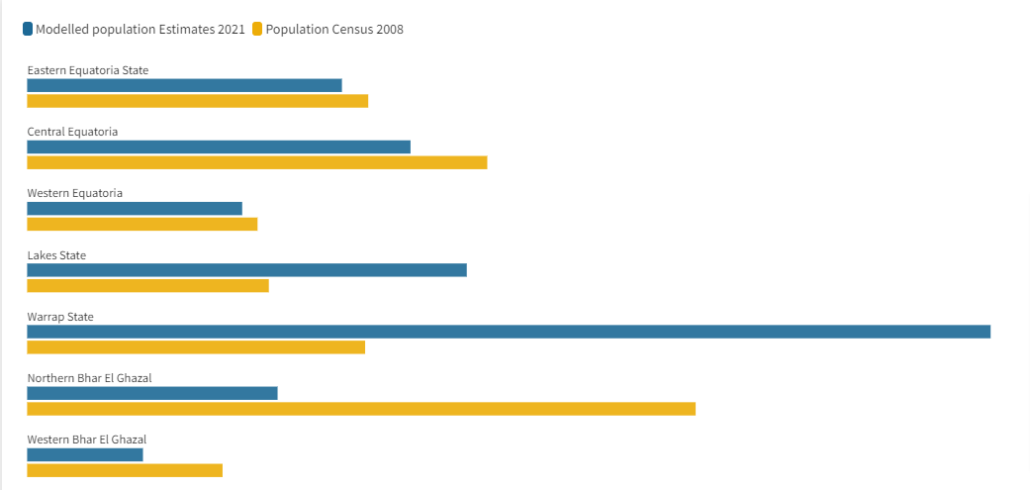
Fig 3. A stacked bar chart showing the figures of the two most recent population census in 2008 and the PES 2021 | Source: Flourish studio data visualization.
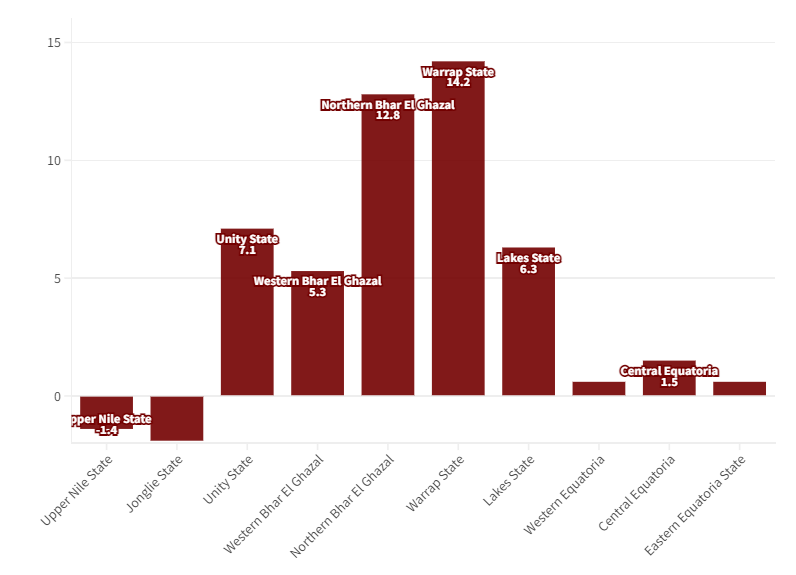
Fig 4: A bar chart showing the population percentage between the two censuses, 2008 and PES 2021 | Source: Flourish Studio Data Visualization
Criticisms from the Public:
The PES 2021 report was received with much scepticism and criticism from the public. Individuals and organisations criticised the authenticity of the data. Some voices challenging the report can be found in this article by The East African and an analysis by The Sudd Institute.
“Some opposition politicians and some in the civil society questioned the estimates that put the total of the country’s population to 12,444,018 and are demanding what they term “a proper census” as per the 2018 peace agreement. UN estimates had put the population at 11,556,069 even though the UN itself partly supported the current survey,” reports The East African
Augustino T. Mayai, the Managing Director of the Sudd Institute, an independent research organisation, analysed the scientific, political, and policy implications of the PES results stating that the new estimates are in stark contrast with South Sudan’s 2008 census counts, which stood at 8.26 million, informing the 2010 regional and national elections. These estimates, he says, “…have so far generated heated debates in various quarters, with many outright contesting them for a host of good reasons.”
However, on the 13th of April, NBS clarified that the PES 2021 results should not be used for electoral purposes, Juba Echo, but for planning and policy guidance, such as Something Augustino T. Magai questions.
‘’…if the PES results cannot be used for electoral purposes, then it is odd to use them
for development. Using the scientifically troubled PES results for development (i.e.,
distributing services) is more problematic than using them for politics. This is because
development is for the ‘greater good for a greater number of people,’ as should be obvious,
South Sudan’s politics benefits a select few. Let me illustrate. Suppose the Northern Bahr el Ghazal government constructs 50 new schools in Aweil East based on the current estimates, subsequently recruiting teachers and enrolling students. It then dawns on the government that only ten such schools must be based on actual enrollments. The result then boils down to resources wasted and injustice inflicted on populations that genuinely deserve the services but could not get..,’’ as quoted in his report.
Conclusion:
Much as the PES 2021 results announced, NBS decried a lot of challenges in bringing out accurate and perfect results; among these, they cited the insecurity in parts of the country, floods that had submerged a lot of the inhabited land areas, lack of resources both financial and human. However, against all odds, they could still get the necessary data.
The PES 2021 results put the current estimated population at 12,446,016, with an increment of 4,186,335 from the 2008 population census, which had the country at 8,260,490. This shows an annual percentage growth of 3.9%.
The current population of South Sudan is 11,556,786 as of Tuesday, April 25th 2023, based on the latest United Nations data. With 43% of the population below 14, 54% between 15 – 64 and 3% representing 65 and above.
Population estimates are a vital source of information for decision-makers throughout the government, private sector, and civil society. In most countries, policymakers and other data users often require accurate information between census data releases every ten years. Although a full population count only occurs during a census, statistical methods and tools often produce regular, up-to-date population estimates.
Demographic components such as mortality, fertility, and migration must be considered to ensure the accuracy of population estimates. Estimates of these components are derived from data available from censuses, surveys, registration systems, and other administrative records. The Cohort Component Method is widely used for producing population estimates and projections.
Given the importance of accurate population estimates, it is recommended that South Sudan conducts regular surveys and censuses to ensure policymakers have the necessary information for decision-making. Innovative methods such as satellite imagery and enumeration can enhance the quality of information and data collected during surveys and censuses. Policymakers should prioritise evidence-based planning and decision-making for progress and sustainable development in South Sudan.
This article is part of our data stories work written with the firm belief that factual and data-driven reporting can influence decision-making and public perceptions and educate the audience on public interest issues.
To ensure accuracy and transparency, we at 211 Check welcome corrections from our readers. If you spot an error in this article, please request a correction using this form. Our team will review your request and make the necessary corrections immediately, if any.
https://211check.org/wp-content/uploads/2023/04/Comparison-between-PES2021-and-2008-population-census-_-Flourish.png4951041211 Checkhttps://211check.org/wp-content/uploads/2020/03/211Check_logo-1-300x120.png211 Check2023-04-29 11:57:252023-04-29 11:57:31Data Story: South Sudan’s population surges to 12.4 million, reveals 2021 survey
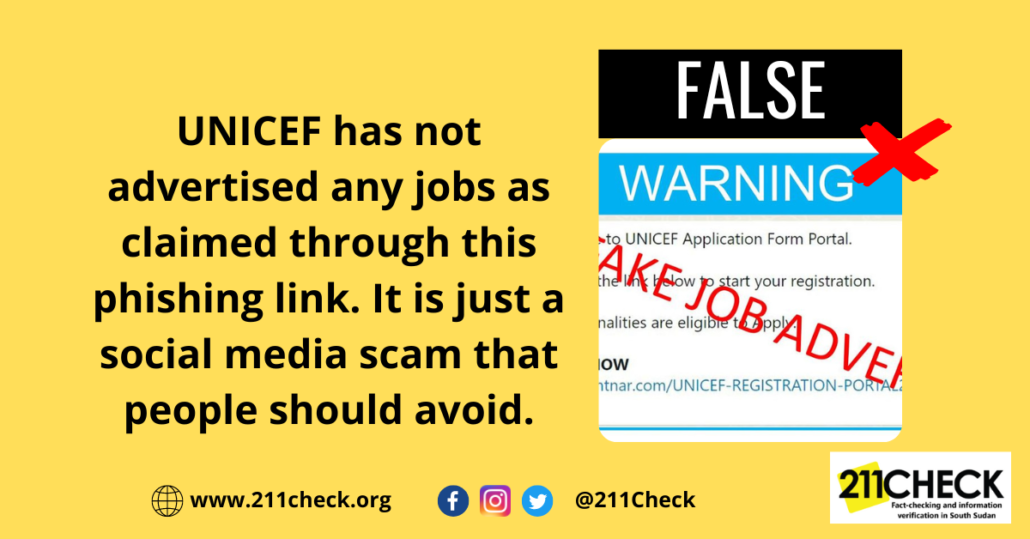
No, UNICEF has not advertised any jobs as claimed in this advert link; it is just a social media scam that people should avoid.
Writer: Jibi Moses
A job advert claiming to be from UNICEF recently went viral on social media, mainly WhatsApp groups, but it is false.
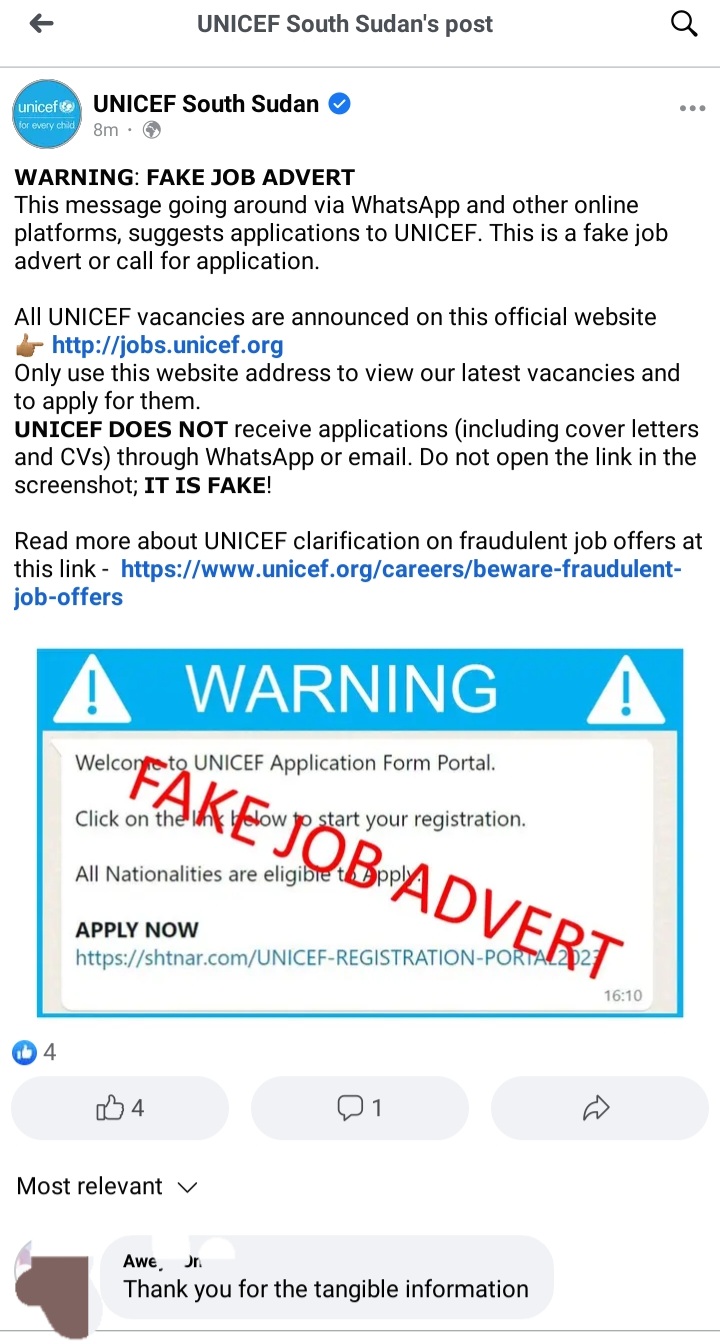
The advert’s welcoming note on the site’s homepage reads, “Welcome to UNICEF Application Form Portal. Click on the below to start your registration. All nationalities are eligible to apply.”
A screenshot of the false advert on WhatsApp
Investigation:
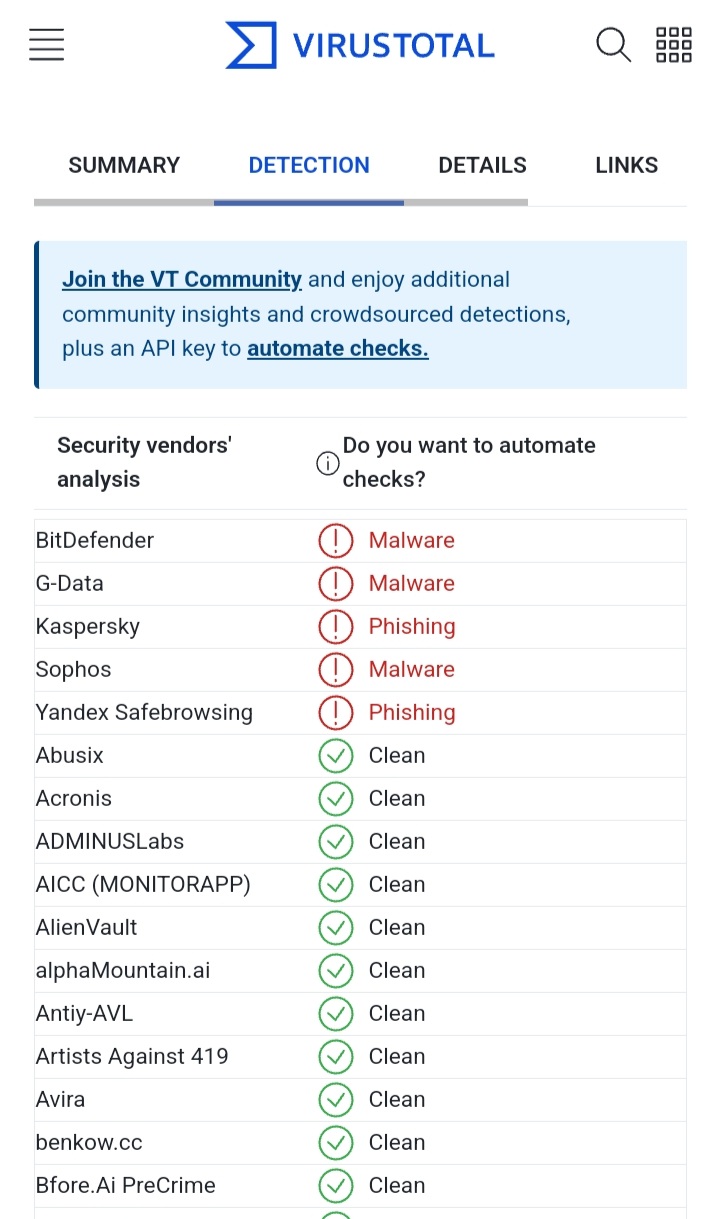
211 Check analysed the site’s address using VirusTotal, a tool used to analyse suspicious files, domains, IPs and URLs to detect malware and other breaches and automatically share them with the security community. The results show that it is phishing malware.
A screenshot of the Virustotal analysis results.
Secondly, UNICEF South Sudan published a disclaimer on its Facebook page, alerting the public that they have not advertised for jobs. Therefore, the public should ignore the message in circulation and consistently get open jobs from their website.
“This message going around via WhatsApp and other online platforms suggests applications to UNICEF. This is a fake job advert or calls for application. All UNICEF vacancies are announced on this official website 👉🏾 http://jobs.unicef.org. Only use this website address to view our latest vacancies and to apply for them,” UNICEF South Sudan said in a Facebook post.
“𝗨𝗡𝗜𝗖𝗘𝗙 𝗗𝗢𝗘𝗦 𝗡𝗢𝗧 receive applications (including cover letters and CVs) through WhatsApp or email. Do not open the link in the screenshot; 𝗜𝗧 𝗜𝗦 𝗙𝗔𝗞𝗘!” It added.
The UNICEFdisclaimer as it is on their Facebook page
Lastly, when the link is opened on a protected computer with an updated antivirus, it is automatically blocked.
Screenshot showing the site being blocked by NordVPN
Conclusion:
211 Check finds that claim that UNICEF is offering jobs through a site other than its original website is false. According to the above results, this job advert is a phishing scam and not genuine. Phishing is a form of social engineering where attackers deceive people into revealing sensitive information or installing malware.
We should always be aware by updating our gadgets with powerful anti-viruses and avoiding opening suspicious links. The public should use basic cyber skills to identify such scams quickly.
Fight misinformation in mainstream and alternative media by not being a victim of fake news. Refrain from sharing content you are unsure about or don’t know where it comes from to prevent spreading false information. For more information on our fact-checking process, visit https://211check.org/ or send us a WhatsApp message at +211 917 298 255 to present a claim. Our team will fact-check it and respond promptly. #FactsMatter
https://211check.org/wp-content/uploads/2023/04/unicef-SCAM-2023.png6281200211 Checkhttps://211check.org/wp-content/uploads/2020/03/211Check_logo-1-300x120.png211 Check2023-04-14 11:18:002023-04-15 11:22:20Fact-check: Is UNICEF currently offering employment opportunities?
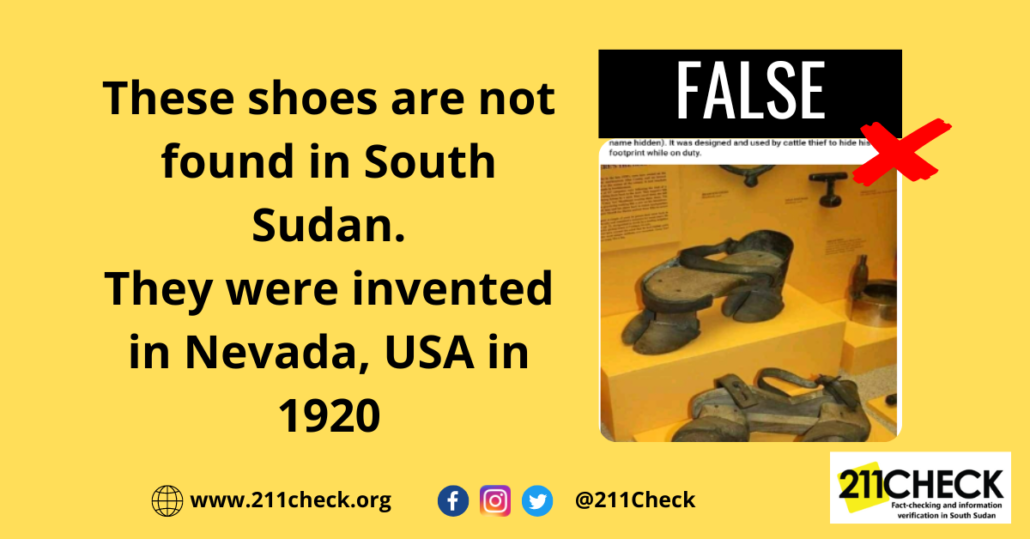
The shoes were invented and used by a cattle thief named Crazy Tex Hazel in 1920 for stealing cows and are currently kept in the Northeastern Nevada Museum in Nevada, USA.
Writer: Jibi Moses
Suncity Tv, a local blog in South Sudan, posted on the 11th of March, 2023, a story with pictures of homemade wood and leather shoes with a design of two pairs of cow hooves on each, allegedly found in some village in South Sudan, but this claim is false.
The page with over 7,000 followers describes itself as a Society and Culture website on a mission to change the negative narrative of South Sudan, promoting all the 64 tribes in South Sudan by showcasing their culture and lifestyles and sharing myriads of success stories to keep you inspired had captioned the shoes, “These shoes were found in some village in South Sudan (village name hidden). A cattle thief designed and used it to hide his footprint while on duty.’’
A screenshot of the post by Suncity TV.
Investigation:
On running a Google Reverse Image Search on the picture, several results were brought on the internet 211 check found that the same pictures were first used in 2021 by a Facebook page named Bentiu Tv and Agogo Ayo, a blog named 9GAG, further still the same pictures were posted on Reddit.
Some sites that previously used this picture can be found here, here, and here. All these pages and blogs clearly explain that these shoes were used by a man called Crazy Tex Hazelwood. He was a notorious cattle thief in America in the year 1920.
In the 1920s, one small-time thief named Crazy Tex Hazelwood made a pair of ingenious boots so he would not get caught stealing cattle from his neighbours. This pair of “boots” look like slippers attached to two cow hooves on each slipper.
211 Check finds that claim that the shoes in the picture were found in a South Sudanese village is false. The shoes are not found anywhere in South Sudan but were used in the US by a notorious cattle thief Crazy Tex Hazel. The shoes are kept in the Northeastern Nevada Museum but not in South Sudan.
Fight misinformation in mainstream and alternative media by not being a victim of fake news. Refrain from sharing content you are unsure about or don’t know where it comes from to prevent spreading false information. For more information on our fact-checking process, visit https://211check.org/ or send us a WhatsApp message at +211 917 298 255 to present a claim. Our team will fact-check it and respond promptly. #FactsMatter
https://211check.org/wp-content/uploads/2023/04/These-shoes-are-not-found-in-South-Sudan.-They-were-invented-in-Nevada-USA-in-1920.png6281200211 Checkhttps://211check.org/wp-content/uploads/2020/03/211Check_logo-1-300x120.png211 Check2023-04-13 11:43:002023-04-15 11:45:17Fact-check: These shoes (Tex Hazel) weren’t found in South Sudan
Fact-checking is an important tool for verifying the accuracy of information in today’s world, and it is vital to be aware of the myths and truths about it.
Writer: Emmanuel Bida Thomas
In today’s world, verifying the accuracy of information is more critical than ever. With the rise of social media and the 24-hour news cycle, it is easy to be bombarded with information, much of which is false or misleading. Fact-checking is the process of verifying the accuracy of the information, and it is an essential tool for anyone who wants to be informed about the world around them.
There are many common myths about fact-checking. One myth is that fact-checking is biased. Fact-checkers are trained to be objective and impartial and use various methods to verify the accuracy of information. However, it is essential to remember that no one is perfect, and there is always the possibility of human error.
Another myth is that fact-checking is only about politics. Fact-checking can be used to verify information about any topic, not just politics. Fact-checkers often fact-check claims made by businesses, celebrities, and other non-political figures.
A third myth is that fact-checking is censorship. Fact-checking is not censorship. It is the process of verifying the accuracy of information. Censorship is the suppression of information that is considered to be objectionable or harmful. Fact-checking is not about suppressing information but ensuring that the information being shared is accurate.
A fourth myth is that fact-checkers are always right. Fact-checkers are human, and they make mistakes. It is important to remember that fact-checking is not a perfect science, and there is always the possibility that a fact-checker could cause an error. If you see a fact-check that you disagree with, you should do your research to verify the information.
A fifth myth is that fact-checking is not necessary. Some people believe fact-checking is unnecessary because they can simply trust their judgment. However, it is essential to remember that we are all susceptible to confirmation bias, which is the tendency to seek information confirming our beliefs. Fact-checking can help us to avoid confirmation bias and to make more informed decisions.
It is essential to be aware of these myths to make informed decisions about the information you consume. If you see a claim you are unsure about, you should do your research to verify the information. You can also use fact-checking websites to help you verify the accuracy of information.
Here are some tips for fact-checking information:
Look for credible sources. When trying to verify information, it is crucial to look for credible and reputable sources. You can check the source’s website to see if they have a clear mission statement and if they list their sources. You can also look for fact-checks of the source by other reputable organisations.
Be sceptical of sensational headlines. Sensational headlines are often designed to grab your attention but may be inaccurate. Reading the entire article before deciding whether to believe the information is essential.
Check the facts. Once you have found a trustworthy source, you can check the facts. Look for evidence to support the claims that are being made. If you can’t find any evidence, or if the evidence is contradictory, then you may want to question the accuracy of the information.
Don’t share information you’re not sure about. Before you share information on social media or with others, make sure you are sure that it is accurate. You can avoid spreading misinformation by taking the time to verify the information before you share it.
Fact-checking is an integral part of being an informed citizen. Awareness of the myths about fact-checking and using the tips above can ensure that you get accurate information as a content creator or news consumer.
https://211check.org/wp-content/uploads/2023/04/Common-misconceptions-about-fact-checking-and-information-verification.png6281200211 Checkhttps://211check.org/wp-content/uploads/2020/03/211Check_logo-1-300x120.png211 Check2023-04-12 14:51:582023-04-12 14:52:03Common misconceptions about fact-checking and information verification
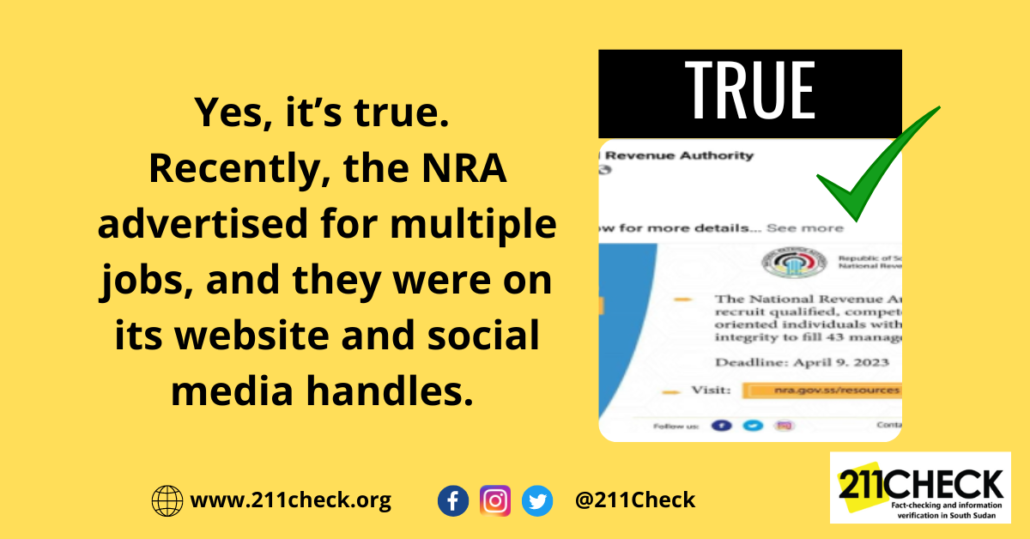
Yes, it’s true. Recently, the NRA advertised for multiple jobs, and they were all over the internet.
Writer: Rogers Louis
A copy of a job advertisement from the National Revenue Authority (NRA) surfaced on the internet (Facebook and WhatsApp groups) between 27th and 28th March 2023, announcing that the NRA calls for applications for several vacancies. The posts were first run on the NRA Facebook page with a caption.
NRA is hiring!
Visit the link below for more details.
All the best!
A screenshot of one of the jobs advertised by the NRA.
Investigation
When 211 check.org investigated the NRA South Sudan official website, it found out that the link provided on the https://nra.gov.ss/ website has the job advert.
Immediately the job advert was released to the public, it raised a lot of suspicions and concerns from the crowd because the number of jobs was so many and in a way or so people were doubting.
Secondly and most importantly, recently early this year, the internet was awash with similar job advertisements from NRA, which turned out to be fake. 211 Check Fact-checked early this year, and it saved a lot of people since then, many have been suspicious of such job alerts.
Here is the official NRA SS website https://nra.gov.ss/ you can visit and confirm the information, and there is a part for Careers whereby Vacancies are found or otherwise if they contract a third party to conduct the information and announce it.
By double-checking everything, investigate all the adverts and news surfacing online on Facebook, WhatsApp, and other websites. It must appear on at least many other websites, not only one, but claims which are scams can also lead to catastrophic results for example, when you press it, you will be directed to a different website and during the direction, your connection to a fake webpage your credentials are copied and sent to the hacker by the (Virus/Warm etc.), and it is hazardous because some sensitive personal information is stolen and shared or sold to the highest bidder and as a result may be some bank accounts will have some amount withdrawn or email or Facebook account will be hijacked, and you will be requested to pay a ransom (Ransomware).
Conclusion:
The above analysis found that NRA South Sudan advertised the jobs, and on many occasions, they came out to encourage the public to apply.
It is always good to be vigilant and cautious while online. The internet is full of both safe and dangerous information. Having basic fact-checking and verification skills is necessary and paramount for everyone.
Fight misinformation in mainstream and alternative media by not being a victim of fake news. Refrain from sharing content you are unsure about or don’t know where it comes from to prevent spreading false information. For more information on our fact-checking process, visit https://211check.org/ or send us a WhatsApp message at +211 917 298 255 to present a claim. Our team will fact-check it and respond promptly. #FactsMatter
https://211check.org/wp-content/uploads/2023/04/the-NRA-advertised-for-multiple-jobs-and-they-were-on-its-website.png6281200211 Checkhttps://211check.org/wp-content/uploads/2020/03/211Check_logo-1-300x120.png211 Check2023-04-11 15:05:002023-04-12 15:16:34Fact-check: Did NRA South Sudan publish a recruitment advert?
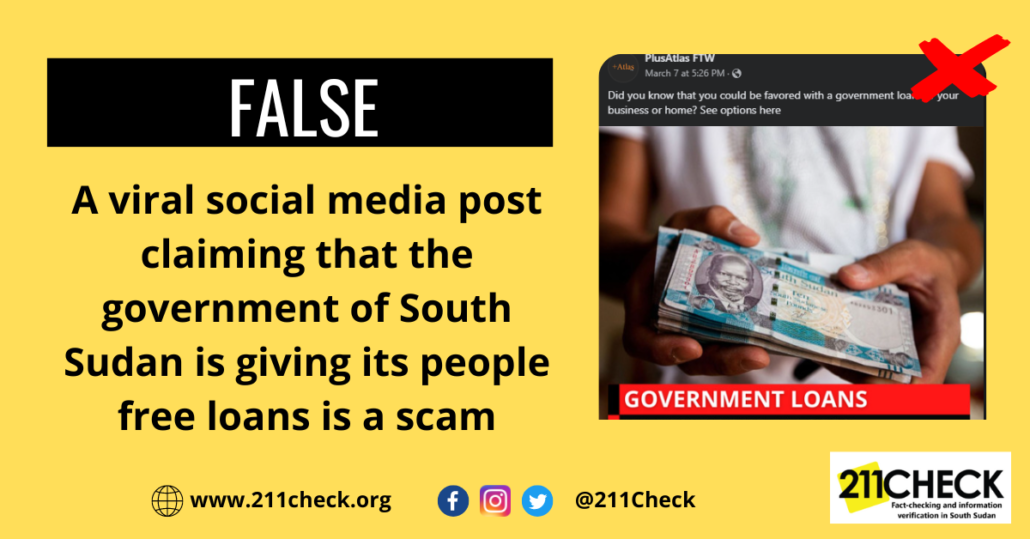
A viral social media post claiming that the government of South Sudan is giving its people free loans is a scam.
Writer: Jibi Moses
A post making viral appearances on social media, mainly Facebook and WhatsApp, claiming that the government of South Sudan is giving its people free loans is false.
A Facebook page, PlusAtlas FTW, first shared the post on the 7th of March, 2023, with a caption, “Did you know you could be favoured with a government loan for your business or home? See options here…”
The post, which is a sponsored Facebook ad, has attracted over 180 reactions, 40 comments and four shares. It had mixed reactions from the public as some people doubted its authenticity while others showed interest in how to access these government loans.
A screenshot of the post from the Facebook page.
Investigation:
Due to the suspicion raised from the post and the comments given by most people, 211 Check had to make a thorough investigation into it.
The above websites are all unrelated and have different content, much as they appear genuine and for well-established companies, for example, Brookfield and Standard Chartered Bank Vuka.
They claim to offer services ranging from banking, housing and other investments. Yet, these entities are neither established in South Sudan nor working in conjunction with the government of South Sudan in any way.
A Google search for free government loans in South Sudan returns no results. And finally, they are not giving out free loans either in the other parts of the world or in South Sudan.
The Bank of South Sudan, the central bank that regulates financial entities in the country, has no information about the said loan.
Screenshot of the whois analysis of Vuka.co.ke
One of the companies that you will be directed to when you click on the money tab. Vuka is a Kenyan company.
Conclusion:
The claim that the government of South Sudan is giving its people free loans, as made in a viral post on social media, is false.
211 Check finds that the links provided on the post direct users to unrelated websites with different content, and a Google search for free government loans in South Sudan yielded no results. The central bank of South Sudan, which regulates financial entities in the country, has no information about such a loan.
Fight misinformation in mainstream and alternative media by not being a victim of fake news. Refrain from sharing content you are unsure about or don’t know where it comes from to prevent spreading false information. For more information on our fact-checking process, visit https://211check.org/ or send us a WhatsApp message at +211 917 298 255 to present a claim. Our team will fact-check it and respond promptly. #FactsMatter
https://211check.org/wp-content/uploads/2023/03/A-viral-social-media-post-claiming-that-the-government-of-South-Sudan-is-giving-its-people-free-loans-is-a-scam.png6281200211 Checkhttps://211check.org/wp-content/uploads/2020/03/211Check_logo-1-300x120.png211 Check2023-03-14 11:13:592023-03-14 11:14:04Fact-check: No, the Government of South Sudan is not giving free loans
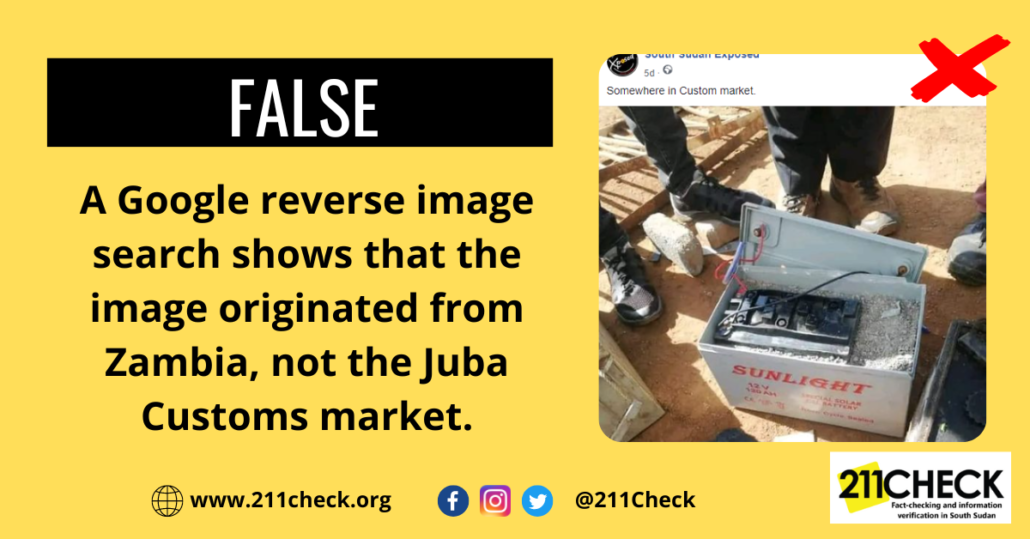
According to google’s reverse image, the image was taken in Zambia and first posted on Zambia Reports’ Facebook page on 2/03/2023.
Writer: Beatrice Amude Paulino
South Sudan Exposed, a South Sudanese online publication, posted on its Facebook a picture claiming it was taken in Custom, a market in the South Sudan capital, Juba city.
The post was captioned ‘somewhere in Custom market’ by South Sudan Exposed, which writes on various news in the whole country with 9,400 likes and over 10,000 followers on Facebook.
The post with the picture allegedly taken at the Customs market portrays fake batteries sold as new in the Custom Market.
A screenshot of a fake battery from the South Sudan Exposed’s Facebook page
Investigation:
On doing a Reverse Image Search on Google, the 211 Check team found that this image was first reported in Zambia by a local online news organisation named Zambia Report.
According to the Zambia Report Facebook page, the batteries are sold at Matero – Lusaka, Zambia.
We could not track down any reputable news outlets that reported on the alleged incident.
A screenshot of Zambia Report Facebook page post
Conclusion:
The claim that a battery photo was taken in Customs Market is false. A Google reverse image search shows that the image originated from Zambia, not the Juba Customs market.
Fight misinformation in mainstream and alternative media by not being a victim of fake news. Refrain from sharing content you are unsure about or don’t know where it comes from to prevent spreading false information. For more information on our fact-checking process, visit https://211check.org/ or send us a WhatsApp message at +211 917 298 255 to present a claim. Our team will fact-check it and respond promptly. #FactsMatter
No, this picture has been used in Zambia and Kenya. All the evidence shows that this picture didn’t originate from Rumbek, South Sudan
Writer: Jibi Moses
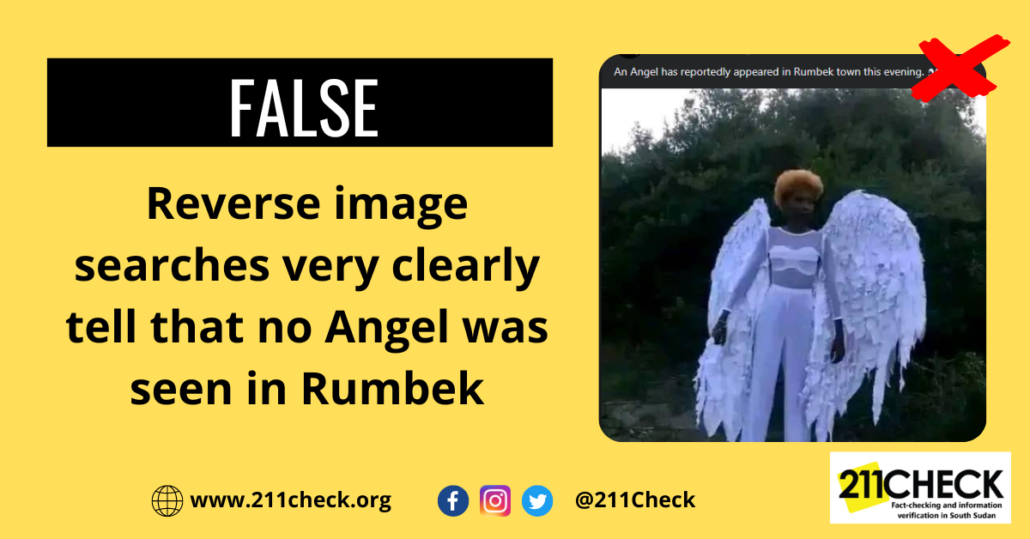
An image posted on a local online Facebook page Juba Eye, claiming an Angel was seen in Rumbek town, is false.
The post that reads, “An Angel has reportedly appeared in Rumbek town this evening”, attracted over one thousand reactions, three hundred comments and thirty-six shares. However, from the comments people were already making on the posts, there were concerns.
A screenshot of the image reported to have been An Angel in Rumbek.
Investigation:
A reverse image search on Google by 211 Check returns results showing that the image in the post had been used before in Zambia, with the same claim of an Angel spotted in Mongu Zambia by a Facebook user in the name of Hon Chardrin Nseema Nseemanini- Speaks.; further still, it has been used in other social media pages as shown in here,here, and here,
The same claim was fact-checked in Kenya by Kenyan.co.ke, an online news outlet by a journalist Maureen Njeri, on 4 March 2023. A YouTube video posted on the 5th of March, 2023, gives more clues after the ‘angel’ was reportedly seen in the Gaturi area, Murang’a County in Kenya.
Conclusion:
211 Check finds the claim that an Angel appeared in Rumbek town false. Reverse image searches very clearly tell that no Angel was seen in Rumbek.
Fight misinformation in mainstream and alternative media by not being a victim of fake news. Refrain from sharing content you are unsure about or don’t know where it comes from to prevent spreading false information. For more information on our fact-checking process, visit https://211check.org/ or send us a WhatsApp message at +211 917 298 255 to present a claim. Our team will fact-check it and respond promptly. #FactsMatter
https://211check.org/wp-content/uploads/2023/03/Reverse-image-searches-very-clearly-tell-that-no-Angel-was-seen-in-Rumbek.png6281200211 Checkhttps://211check.org/wp-content/uploads/2020/03/211Check_logo-1-300x120.png211 Check2023-03-08 15:20:182023-03-08 15:20:24Fact-check: No, an Angel didn’t appear in Rumbek town
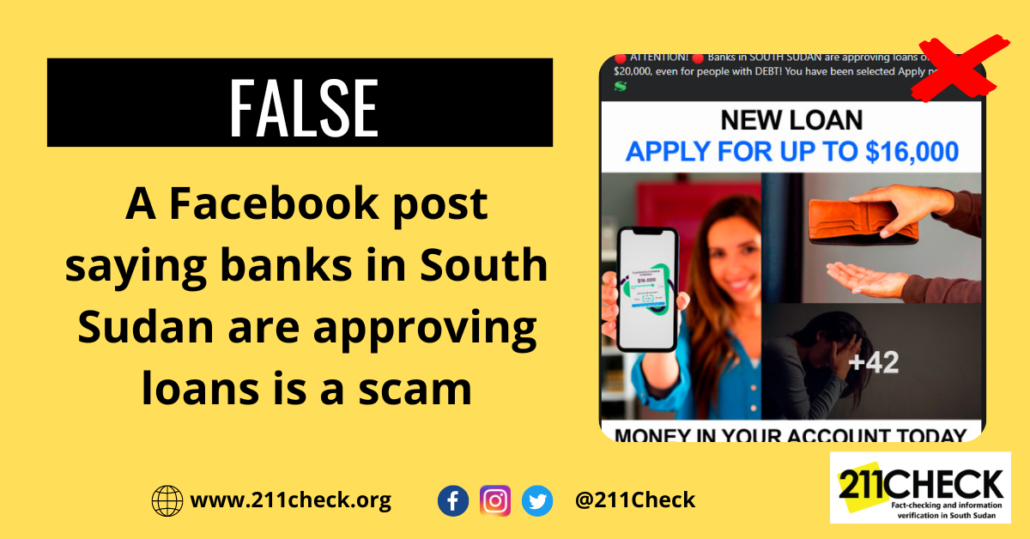
There is no South Sudanese bank giving out loans, this is another online fraud. It shows how scammers use fake loan adverts to trick people into giving their personal information.
Writer: Jibi Moses
Beware of loan scams on social media! A post with the bold headline “New Loan, Apply for up to $16000” is making rounds on social media in South Sudan. The post claims that banks in the country approve loans of up to $20,000, even for those with debt, and provides a link for interested individuals to click to access the loan money. However, the post is nothing but a scam.
The page behind the post, named Finance-Personal loans, introduces itself as Escrow, and it is neither rated nor has any reviews. Only a few people reacted to the post, but some expressed interest in the opportunity.
The link in the post leads to a page that asks how much money you need and provides four options to choose from. Clicking on any of the figures takes you to the next page, which looks a little suspicious. The page asks if you have a credit card and gives you three options to choose from: “Yes,” “No,” or “No, I would like to.”
Screenshot of the false post on Facebook
A screenshot of the main advert of the post.
After selecting an option, you will be directed to another page where you need to confirm that you are not a robot. After that, you will be redirected to a website owned by M&T Bank, an American bank holding company headquartered in Buffalo, New York.
The website has unclear instructions, but a small instruction says, “I need my loan.”
The template where one is given the options of money amount
“When you click on any of the amounts or figures above, the next slide appears scary and suspicious.
“Do you have a credit card?” is the question presented, with the options of “Yes,” “No,” or “I would like to.” You must select an option to continue.”
“Whatever choice you make, you will be directed to the next page, where you will be asked to confirm that you are not a robot.
This is a website of M&T BANK with unclear instructions, except for a small instruction that I need for my loan.”
Upon investigation, it was discovered that the link provided in the post, when analysed on Whois, was for a different company called Returso. M&T Bank has no branch in South Sudan or dealings in the country. Therefore, the post is nothing but a scam, and no banks in South Sudan are giving out loans to anyone.
Screenshot showing Whois information for the scam site
Meanwhile, M&T Bank Corporation is an American Bank holding company headquartered in Buffalo, New York. It has no branch in South Sudan nor any dealings in the country.
Conclusion:
Based on the information presented, the entire article appears to be fraudulent since no South Sudan banks provide loans to individuals. The two organisations, Returso and M&T Bank mentioned do not have a presence in this region, and their websites do not indicate any offers for free loans.
Scammers use these tricks for fishing out people’s personal details, which they later use for personal gains. These personal details include email addresses, bank account information, social media accounts, and more. It is important to remain vigilant and protect oneself against cybercrime.
If it sounds too good to be true, it probably is. Before applying for any loans, research and check the authenticity of the institution offering the loan. It is always better to be safe than sorry.
Fight misinformation in mainstream and alternative media by not being a victim of fake news. Refrain from sharing content you are unsure about or don’t know where it comes from to prevent spreading false information. For more information on our fact-checking process, visit https://211check.org/ or send us a WhatsApp message at +211 917 298 255 to present a claim. Our team will fact-check it and respond promptly. #FactsMatter
https://211check.org/wp-content/uploads/2023/03/A-Facebook-post-saying-banks-in-South-Sudan-are-approving-loans-is-a-scam.png6281200211 Checkhttps://211check.org/wp-content/uploads/2020/03/211Check_logo-1-300x120.png211 Check2023-03-02 21:15:452023-03-02 21:15:51Fact-check: A Facebook post saying banks in South Sudan are approving loans is a scam
We may request cookies to be set on your device. We use cookies to let us know when you visit our websites, how you interact with us, to enrich your user experience, and to customize your relationship with our website.
Click on the different category headings to find out more. You can also change some of your preferences. Note that blocking some types of cookies may impact your experience on our websites and the services we are able to offer.
Essential Website Cookies
These cookies are strictly necessary to provide you with services available through our website and to use some of its features.
Because these cookies are strictly necessary to deliver the website, refusing them will have impact how our site functions. You always can block or delete cookies by changing your browser settings and force blocking all cookies on this website. But this will always prompt you to accept/refuse cookies when revisiting our site.
We fully respect if you want to refuse cookies but to avoid asking you again and again kindly allow us to store a cookie for that. You are free to opt out any time or opt in for other cookies to get a better experience. If you refuse cookies we will remove all set cookies in our domain.
We provide you with a list of stored cookies on your computer in our domain so you can check what we stored. Due to security reasons we are not able to show or modify cookies from other domains. You can check these in your browser security settings.
Other external services
We also use different external services like Google Webfonts, Google Maps, and external Video providers. Since these providers may collect personal data like your IP address we allow you to block them here. Please be aware that this might heavily reduce the functionality and appearance of our site. Changes will take effect once you reload the page.
Google Webfont Settings:
Google Map Settings:
Google reCaptcha Settings:
Vimeo and Youtube video embeds:
Privacy Policy
You can read about our cookies and privacy settings in detail on our Privacy Policy Page.